
Global financial markets experienced sharp swings overnight. International crude oil prices plunged more than 8% in a single session, gold and silver surged in tandem, the three major U.S. stock indexes closed higher but with severe internal divergence, and Chinese ADRs staged an independent strong rally. Meanwhile, the People’s Bank of China announced a 300 billion yuan (approximately $45.0 billion) outright reverse repurchase operation, and a number of China A-share listed companies rolled out buyback and share increase plans in quick succession.
The oil market was the epicenter of this round of volatility. Traders bet that Middle East tensions could cool more quickly after the U.S. midterm elections. January-delivery Brent crude futures settled down 8.67% at $94.62 a barrel, while December-delivery WTI crude futures fell 8.29% to $88.12 a barrel. The scale of the single-day decline was rare for the energy market in recent memory.
Precious metals moved in the completely opposite direction. Spot gold rose 3.28% to $4,058.93 an ounce, while November-delivery COMEX gold futures gained 3.39% to $4,061.10 an ounce. Spot silver rose 4.86% to $52.19 an ounce, with COMEX silver futures up an even sharper 5.11%.
On the U.S. equities side, the Dow Jones Industrial Average closed up 3.03%, topping 53,000 points for the first time since September 8 and posting its best single-day performance since April 9, 2025. The Nasdaq Composite rose 1.44% and the S&P 500 gained 1.58%. But behind the index gains was a sharp rupture between sectors.
Large-cap technology stocks surged collectively, with Microsoft and Amazon both up more than 6% and Apple up 5.31%. In stark contrast, artificial intelligence and semiconductor-related names fell against the trend: Nvidia dropped 3.17%, the Philadelphia Semiconductor Index fell 3.6% to a six-month low, and Marvell Technology tumbled more than 7%. Memory chip stocks were especially weak, with Seagate Technology down more than 8%, Micron Technology and SanDisk down 7%, and Western Digital down more than 6%. Cloud services company CoreWeave fell more than 9% and NEBIUS dropped more than 7%; in optical communications, Lumentum and Coherent each fell more than 5%.
Chinese ADRs, by contrast, staged a broad rally. The Nasdaq Golden Dragon China Index rose 3.49%, with Alibaba up 4.91%, Baidu up 4.50%, NetEase up 4.33%, JD.com up 3.05% and Pinduoduo up 2.47%. The Livermore China ADR Leaders Index closed up 1.7%, with KE Holdings and Bilibili each gaining more than 5%.
Qualcomm fell more than 5% in after-hours trading. The company gave lackluster profit guidance for the next fiscal quarter, citing broad increases in component and manufacturing costs, and projected earnings per share of $2.15 to $2.35 on revenue of $10.4 billion to $11.2 billion, both slightly below the average analyst estimate.
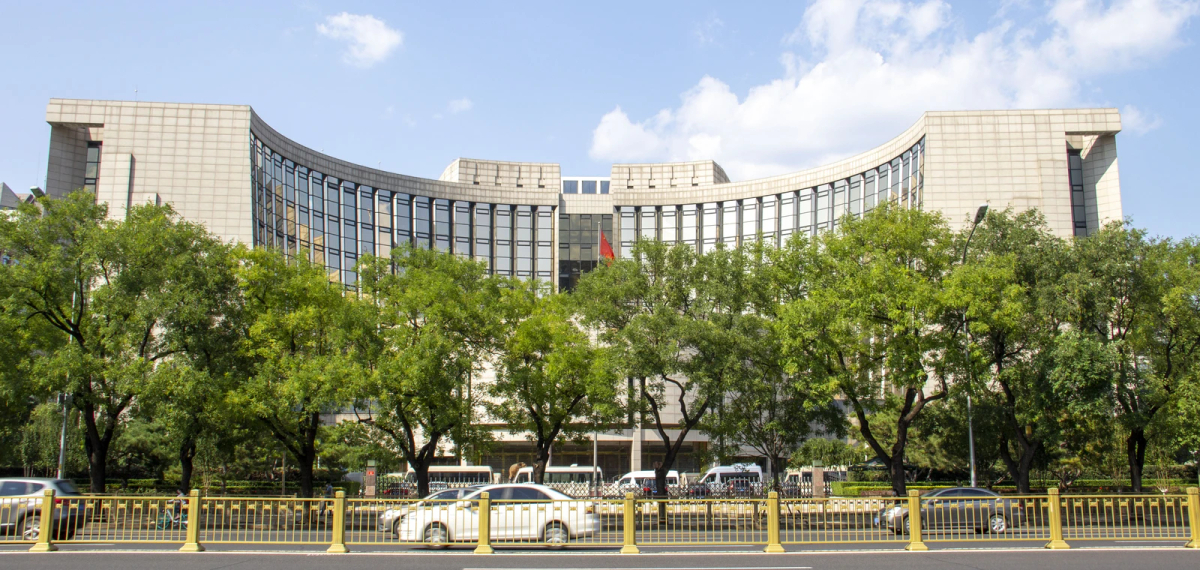
On the Chinese policy front, the People’s Bank of China on November 5 conducted a 300 billion yuan (approximately $45.0 billion) outright reverse repurchase operation through a fixed-quantity, rate-tender, multiple-price auction, with a term of three months (91 days) and a maturity date of February 4, 2027. The move is aimed at keeping liquidity ample in the banking system.
China’s National Development and Reform Commission and four other departments issued an action plan for implementing a comprehensive conservation strategy, proposing that by 2030 energy consumption per unit of GDP, water consumption and construction land use area be reduced by about 10%, 10% and 15%, respectively, compared with 2025. Annual recycling of major renewable resources is targeted to reach 510 million tons, and annual utilization of bulk solid waste to reach about 4.5 billion tons. The plan explicitly calls for accelerating the layout of rare and precious metal resource recycling projects and improving rules on the decommissioning and scrapping of wind and solar equipment.
The Shanghai Stock Exchange and China Securities Index Co. announced revisions to the compilation methodology of the SSE Hong Kong Stock Connect Index, with changes to the sample space, calculation rules, and regular and temporary adjustment rules. Regular adjustments will now take place quarterly, with a 10% cap on the weight of any single constituent. The temporary adjustment rules take effect from the date of the announcement, while other rules take effect from December 14, 2026.
The wave of buybacks and share increases by China A-share listed companies continued. Hengtong Optic-Electric (600487.SS) announced a plan to buy back 100 million yuan to 200 million yuan (approximately $15.0 million to approximately $30.0 million) of its shares, while its controlling shareholder unveiled a plan to increase its stake by 400 million yuan to 600 million yuan (approximately $60.0 million to approximately $90.0 million) the same day. Asymchem (002821.SZ) plans to buy back 500 million yuan to 700 million yuan (approximately $75.0 million to approximately $105.0 million) of shares, Three-Circle Group (300408.SZ) plans a buyback of 500 million yuan to 1 billion yuan (approximately $75.0 million to approximately $150.1 million), the chairman of Xingsen Technology (002436.SZ) proposed a buyback of 400 million yuan to 500 million yuan (approximately $60.0 million to approximately $75.0 million), and the chairman of Crystal-Optech (002273.SZ) proposed a buyback of 100 million yuan to 200 million yuan (approximately $15.0 million to approximately $30.0 million).
In other corporate developments, a wholly owned subsidiary of Jereh Group (002353.SZ) received a letter of award worth about 18.1 billion yuan (approximately $2.7 billion) from the onshore arm of Abu Dhabi National Oil Company of the UAE; a controlled subsidiary of Tongyi Co. (600506.SS) signed a strategic cooperation agreement on coolant with CATL; and Demingli (001309.SZ) plans to distribute a cash dividend of 6 yuan per 10 shares, totaling 191 million yuan (approximately $28.7 million), with its controlling shareholder pledging to extend a commitment not to reduce its holdings by one year.
On the regulatory front, Tianshan Cement (000877.SZ) was placed under investigation by the China Securities Regulatory Commission on suspicion of information disclosure violations; Su Da, the actual controller of Jiangsu Leili (300660.SZ), was placed under investigation by the CSRC on suspicion of information disclosure and violations related to reducing holdings; and the actual controller of Breo (688793.SS) was fined 11.8419 million yuan (approximately $1.8 million) for manipulating the securities market.
On the industry front, Huanghe Whirlwind (600172.SS) confirmed that its wholly owned subsidiary Lianyi Diamond (Henan) Co. would raise prices for large single-crystal products (rough lab-grown diamonds) by 10% starting November 1, the second price increase this year after an initial adjustment in March. The company said prices are set based on market conditions and that no products other than large single-crystal items were raised.
Twenty organizations including the China Academy of Information and Communications Technology, Huawei, Alibaba, Tencent and Xiaomi jointly released a self-discipline convention on the development of intelligent agents, proposing the construction of infrastructure for agent interconnection to lower the cost of cross-domain discovery and connection and accelerate their empowerment of all industries.
On the overseas policy front, Chinese Foreign Ministry spokesperson Mao Ning, responding to questions about the U.S. midterm elections at a regular press briefing, said the midterms are a U.S. domestic affair and that China is willing to continue working with the U.S. to uphold and implement the important consensus reached by the two heads of state, strengthen communication, properly handle differences and expand cooperation.
In terms of market impact, if the more than 8% single-day drop in oil prices persists, it would directly ease cost pressure on downstream industries such as aviation, logistics and chemicals, but would squeeze profit margins for upstream oil and gas producers. The simultaneous surge in gold and silver reflects a complex mix of safe-haven demand and inflation expectations. Within U.S. equities, there are clear signs of capital rotating from AI hardware into large platform stocks, and valuation pressure on the semiconductor and memory sectors warrants attention. The collective strength of Chinese ADRs is tied to a recovery in risk appetite for Chinese assets. Domestically in China, the PBOC’s outright reverse repurchase operation continued its liquidity-supportive stance, while the concentrated buybacks and share increases by multiple listed companies have a positive effect on stabilizing market sentiment.