
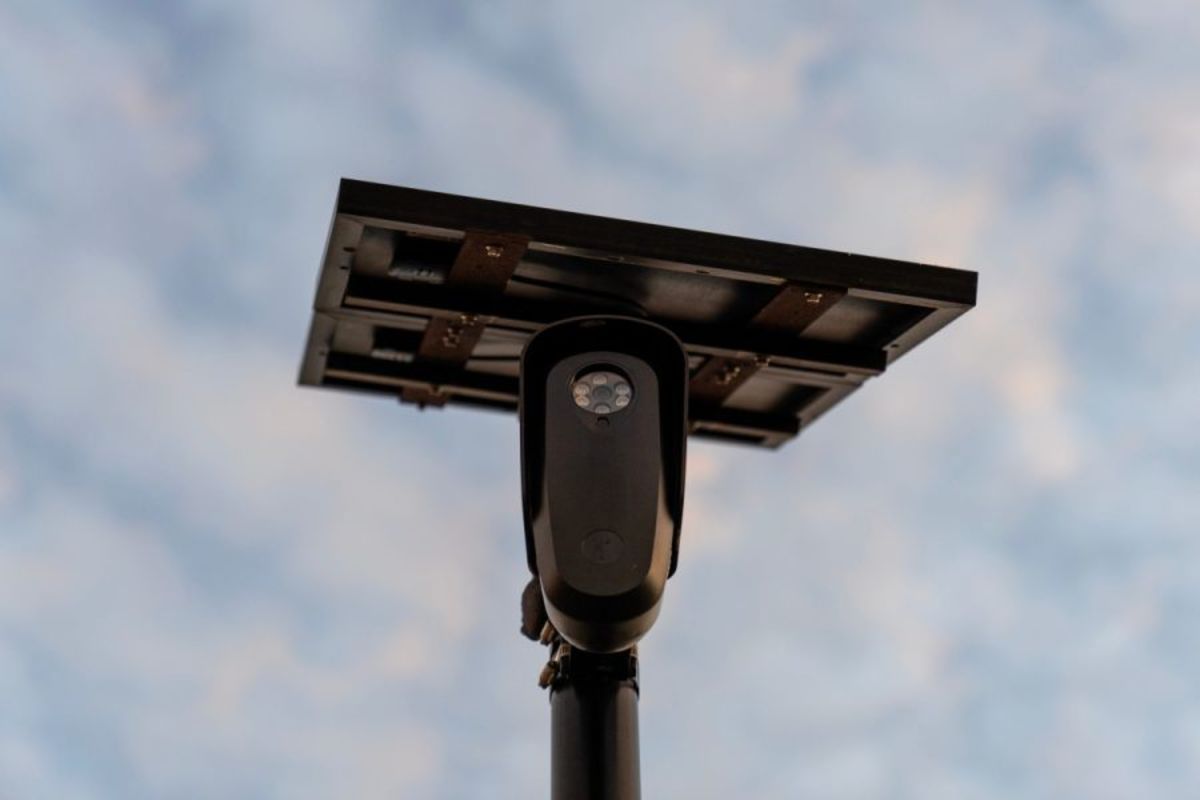
SPRINGFIELD, Mo. — The Springfield Police Department (SPD) is updating its policies and safeguards surrounding automated license plate reader (ALPR) technology, aiming to balance public safety needs with civil liberties and privacy concerns.
During a press conference Wednesday morning, Springfield Police Chief Paul Williams outlined updates to its standard operating procedures, the rollout of a public transparency portal, and tighter restrictions on how department data is shared with outside law enforcement agencies.
“We hear your concerns about transparency, accountability, and privacy,” Williams said. “Our actions reflect a commitment to being clear and transparent about how we use technology in ways that protect both the community safety and individual civil liberties.”
Policy Changes and Safeguards
Under the revised guidelines, SPD says ALPR data collected in Springfield is retained for 30 days and automatically deleted unless tagged as part of an active criminal investigation.
To address privacy concerns, the department says it has significantly narrowed data-sharing protocols:
-
Data is shared exclusively with law enforcement agencies in Missouri and adjacent states that agree to reciprocal data sharing, cutting outside access roughly in half, according to Chief Williams.
-
SPD does not share ALPR data with federal agencies, and the system possesses no facial recognition capabilities.
-
Only trained, authorized personnel can search the system, and every search must be tied to a specific case, incident, or warrant number.
-
Guidelines strictly forbid using ALPR technology to track individuals based on race, ethnicity, religion, or participation in constitutionally protected activities such as protests or political events.
Williams added that data stored via Amazon Web Services GovCloud is owned solely by SPD and cannot be accessed, sold, or analyzed by third-party vendors.
The department’s Inspections and Internal Affairs Unit conducts monthly audits of every ALPR search. A mid-October audit flagged 33 entries for additional review, all of which were cleared as valid searches.
Williams noted that the department has never had a confirmed case of ALPR misuse since first adopting the technology in 2007 and following expansion in 2012.
SPD says it also reviewed its policies following a recent executive order from Gov. Mike Kehoe and updated Department of Public Safety guidelines, determining the department was already in full compliance with state standards.
Impact on Crime
Williams credited the technology as a vital tool for investigative leads, noting that reports of stolen vehicles in Springfield have dropped by approximately 50% over the past four years.
During a 30-day window between Sept. 26 and Oct. 26, the system performed 1,992 searches, resulting in 55 new investigative leads, the recovery of 17 stolen vehicles and 19 license plates, and two arrests.
“An ALPR alert is not the whole story. It’s one piece of an investigative puzzle,” Williams said, emphasizing that officers must visually verify every alert before taking enforcement action. “Technology does not replace good policing, but it can enhance it.”
Residents can view camera locations, system usage statistics, and policy documents through the department’s newly updated Flock Transparency Portal.
Copyright 2026 Nexstar Media, Inc. All rights reserved. This material may not be published, broadcast, rewritten, or redistributed.For the latest news, weather, sports, and streaming video, head to KOLR – OzarksFirst.com.