
Microsoft’s latest DirectX Raytracing (DXR) technology continues to deliver remarkable results in independent testing, with NVIDIA’s GeForce RTX 5080 achieving a more than 220-fold frame-rate improvement and a 94% reduction in acceleration structure memory consumption in a particularly demanding synthetic demonstration.
Following our recent coverage of AMD’s Radeon RX 9070 XTgraphics enthusiast Osvaldo Pinali Doederlein has now also tested Microsoft’s Clustered Geometry implementation on an NVIDIA GeForce RTX 5080, producing even more impressive results.
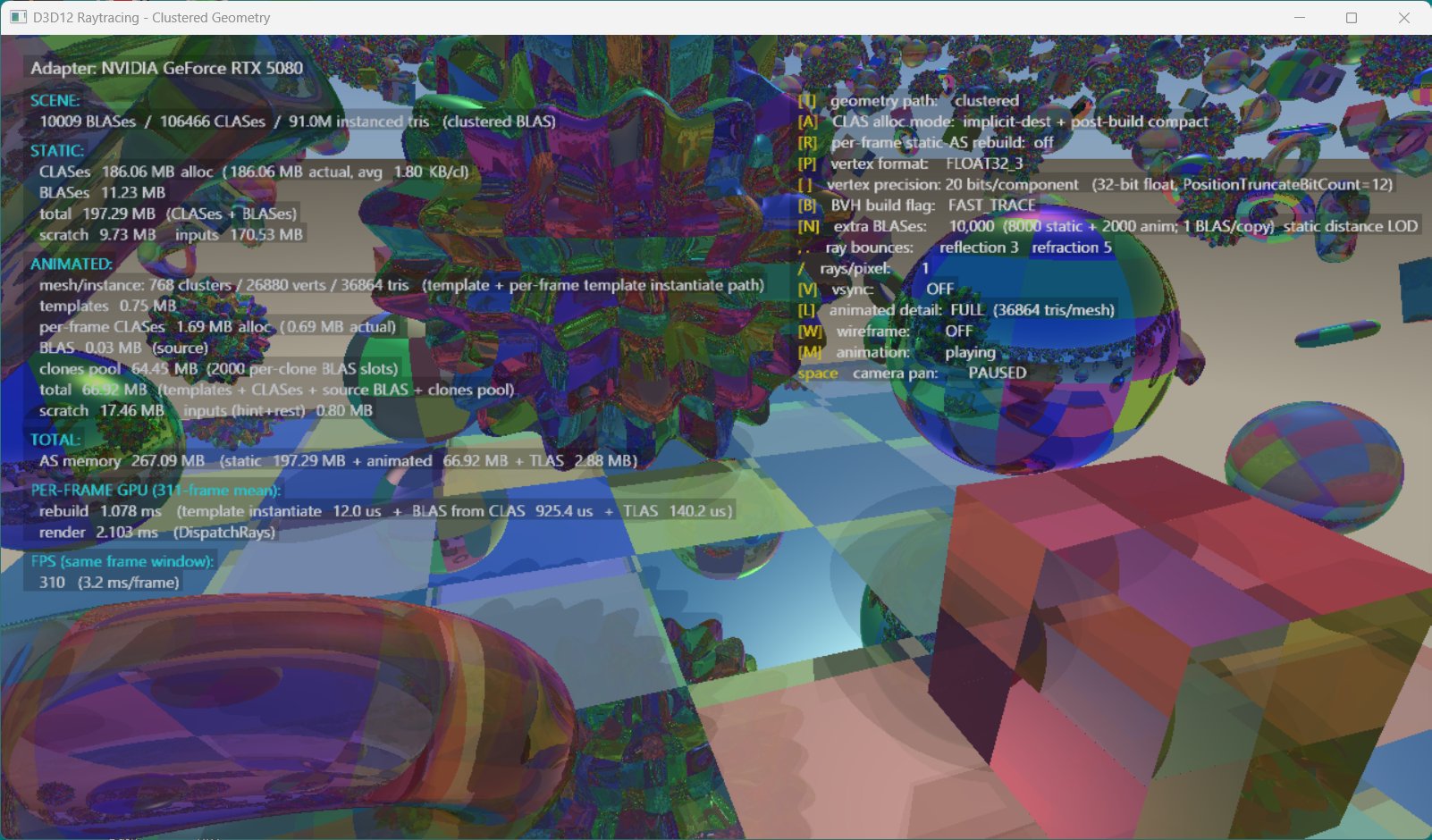
RTX 5080 Goes From 1.4 FPS To 310 FPS With Clustered Geometry Enabled
Using the same D3D12RaytracingClusteredGeometry sample employed in his previous AMD testing, Osvaldo compared conventional Bottom-Level Acceleration Structure (BLAS) rebuilding against Microsoft’s new Clustered Geometry implementation.
He also ensured that the animation was paused at the exact same frame for a consistent comparison.
The RTX 5080 delivered the following results:
| Metric | Traditional BLAS | Clustered Geometry |
|---|---|---|
| Frame rate | 1.4 FPS | 310 FPS |
| Acceleration structure rebuild | 720 ms | 1.0 ms |
| Ray dispatch time | 1.8 ms | 2.0 ms |
| Acceleration structure memory | 4,716 MB | 267 MB |
That’s approximately 221× higher frame rates, 720× faster acceleration structure rebuilding, and 94.3% lower memory consumption.
Interestingly, the actual ray dispatch time increased slightly from 1.8 ms to 2.0 msreinforcing our previous observation that these enormous performance improvements primarily stem from reducing acceleration structure construction overhead rather than accelerating ray traversal itself.
Compared with the Radeon RX 9070 XTwhich achieved 91 FPS with Clustered Geometry enabled, NVIDIA’s RTX 5080 was approximately 3.4 times faster in this particular test.
The NVIDIA GPU also consumed substantially less acceleration structure memory, both with Clustered Geometry enabled and disabled. Osvaldo attributes this advantage partly to NVIDIA’s more mature Bounding Volume Hierarchy (BVH) compression technologywhich dates back to its Turing architecture.
Curiously, the RX 9070 XT actually outperformed the RTX 5080 with Clustered Geometry disabled, achieving 1.7 FPS versus 1.4 FPS. This highlights how drastically acceleration structure rebuilding costs can affect performance, independently of a GPU’s actual ray tracing throughput.
Osvaldo also cautioned against extrapolating these numbers to actual games. The sample lacks a Level of Detail (LOD) system, leaving unnecessarily complex geometry visible even in distant areas. Real-world path-traced games employ considerably more sophisticated optimizations, making such extreme performance improvements highly unlikely.
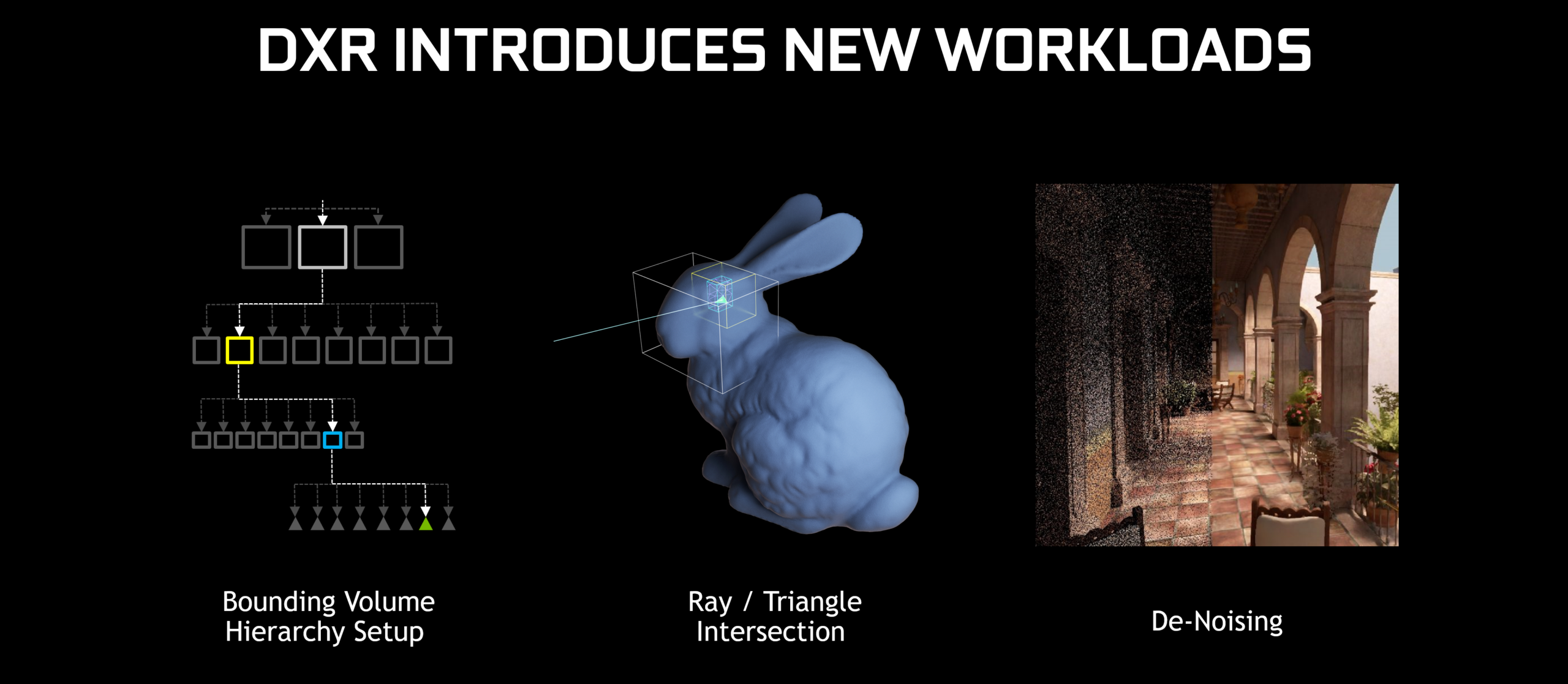
NVIDIA Details How RTX Mega Geometry Enables Path Tracing Of 60 Million Animated Plants
Meanwhile, NVIDIA has published a detailed technical whitepaper explaining how Microsoft’s new Clustered Geometry and Partitioned Top-Level Acceleration Structures (PTLAS) essentially standardize key capabilities of its existing RTX Mega Geometry technology.



Clustered Geometry organizes triangles into reusable acceleration structures, avoiding expensive rebuilding operations whenever detailed meshes are animated or modified.
PTLAS tackles a related problem at the scene level, allowing developers to update individual sections of a large environment instead of repeatedly reconstructing its entire top-level acceleration structure.
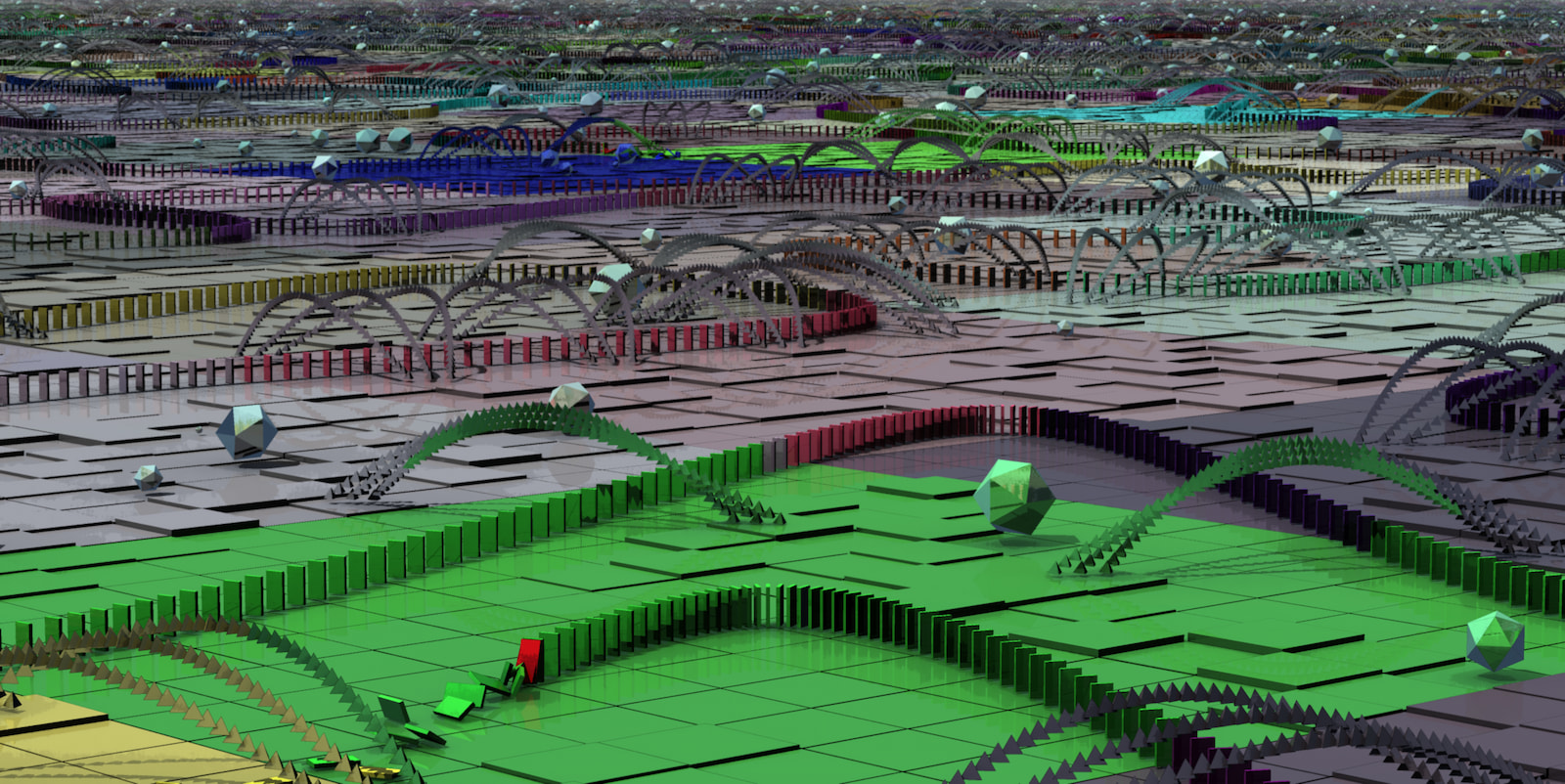
NVIDIA demonstrates the possibilities through an upcoming DirectX 12 sample featuring a 25 km² forest containing 60 million individually animatable plantswith real-time path tracing and dynamic vegetation.
The demonstration uses 636 reusable tessellation patterns to efficiently manage terrain geometry, while partitions dynamically adjust according to camera position and environmental conditions such as wind.
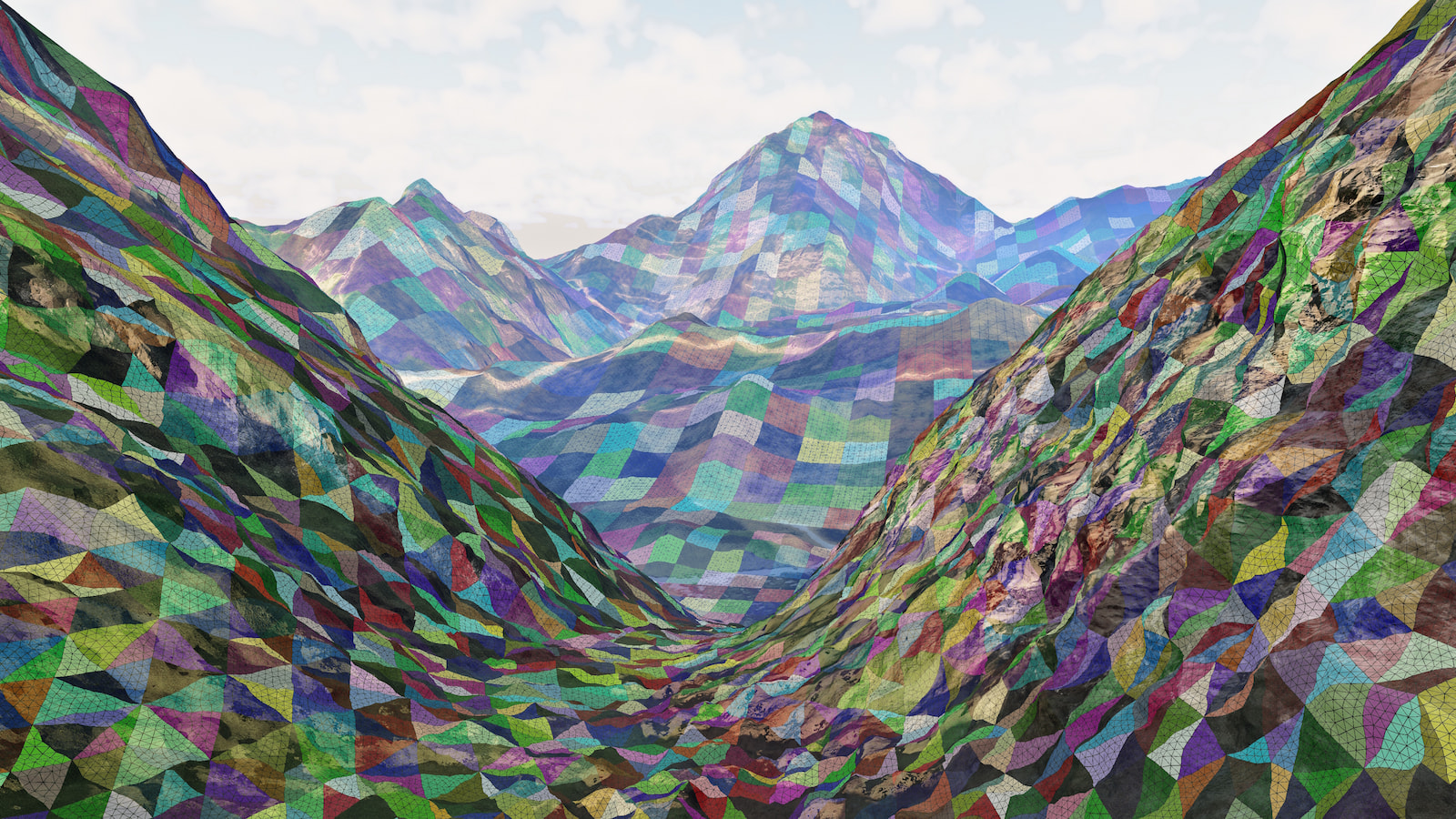
These developments could prove particularly valuable for future open-world games, including The Witcher 4for which NVIDIA has already demonstrated its RTX Mega Geometry foliage technology.
Crucially, NVIDIA Game Ready Driver 621.01 already supports Clustered Geometry and PTLAS across every GeForce RTX generationwithout requiring a dedicated preview driver. However, the DirectX 12 features themselves remain part of the Agility SDK 1.722 Preview. AMD, meanwhile, currently provides a separate developer preview driver for compatible Radeon GPUs.
As we previously reportedMicrosoft’s standardization of these technologies should make advanced geometry management accessible across supported NVIDIA, AMD, and Intel hardware.
Although these synthetic results should not be confused with real-world gaming performance, they demonstrate just how much computational overhead can be eliminated through more efficient acceleration structure managementpotentially allowing future games to feature substantially more detailed ray-traced environments without proportional performance penalties.
News Source: Osvaldo Pinali Doederlein’s X thread

About the author: Sebastian Castellanos is a data scientist by education and training. He’s also deeply passionate about PC gaming hardware and software. He has recently started writing technical articles and guides on Wccftech about PC hardwaregames and mods.
Follow Wccftech on Google to get more of our news coverage in your feeds.