
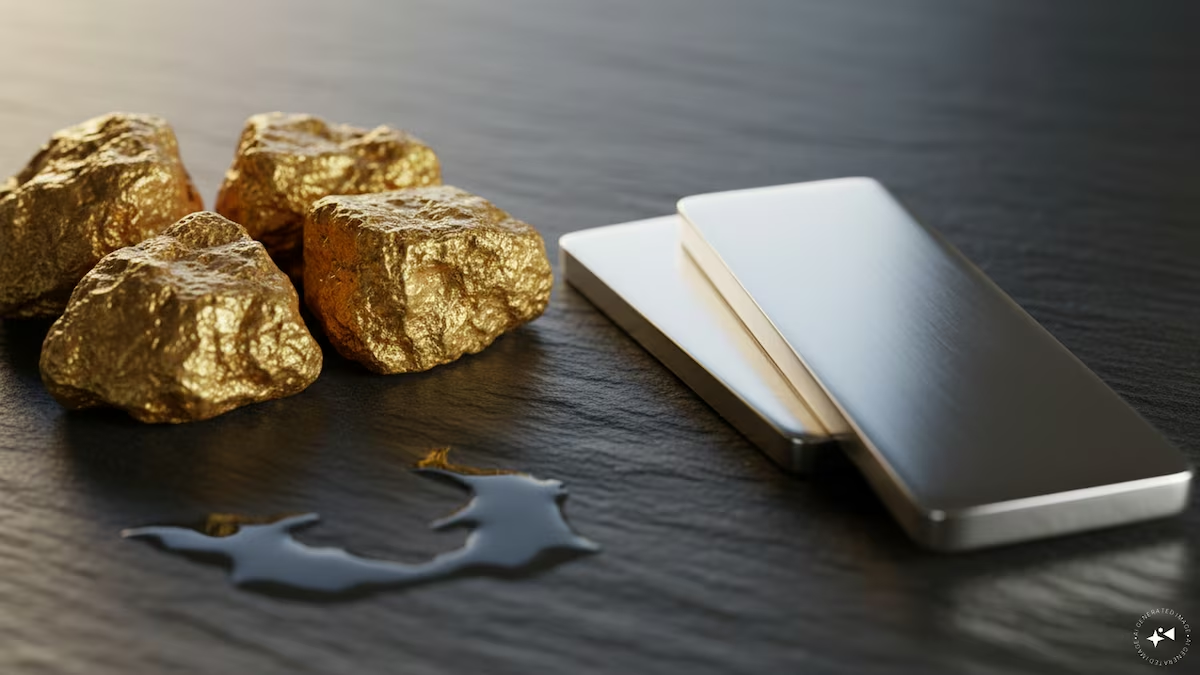
Gold and silver prices recovered in international markets on Wednesday, November 4, after declining sharply in the previous session. Softer crude oil prices, expectations around US monetary policy and developments in the ongoing geopolitical conflicts remain key factors influencing bullion prices.
On the COMEX, gold futures were trading at $3,963.20 per ounce, up $22.80 or 0.58% from the previous close of $3,940.80 an ounce. Prices touched a high of $3,970.20 and a low of $3,928.20 an ounce.
COMEX silver futures gained 0.48% to $49.990 per ounce, against the previous close of $49.825 an ounce. The metal traded between $49.405 and $50.205 anounce.
In the spot market, gold rose 0.2% to $3,934.75 per ounce, while silver slipped 0.2% to $49.67 per ounce in early Asian trade.
The recovery follows a decline in domestic bullion prices on Tuesday (November 3). In Delhi, gold of 99.9% purity fell ₹700 to ₹1.41 lakh per 10 grams, while silver declined ₹2,000 to ₹1.84 lakh per kg, according to the All India Sarafa Association.
Why are gold and silver prices moving?
Softer crude oil prices: Oil prices fell around 1% on Tuesday (November 3) to their lowest level in nearly four weeks. Lower crude prices can ease inflation concerns and reduce expectations that central banks will need to maintain elevated interest rates for an extended period. This can support gold, which does not generate interest income.
US elections and interest rate outlook: Investors are assessing the US midterm election results and awaiting labour market data for clues on the Federal Reserve’s next policy moves. According to CME’s FedWatch tool, traders currently see a 78% probability of a rate hike in December.
Expectations of higher interest rates can weigh on gold by increasing the opportunity cost of holding the metal.
Geopolitical developments: Markets are also tracking diplomatic efforts to end the Russia-Ukraine and Iran-US conflicts. Russia has confirmed three-way peace talks involving Ukraine and the US in Abu Dhabi on November 10-11. Meanwhile, negotiations between Iran and the US remain uncertain.
Any escalation or progress towards a settlement could influence safe-haven demand for gold.
India’s gold demand: Are consumers changing how they buy?
High gold prices are weighing on jewellery purchases and investment demand in India. The World Gold Council (WGC) said on Tuesday that India’s gold demand is expected to fall to a six-year low in 2026.
However, industry experts point to a shift in purchasing behaviour, with consumers exploring smaller purchases and digital formats alongside traditional jewellery buying.
“As gold prices climb, Indian households are not buying less gold; they are buying it differently,” said Sudeep Chatterjee, CEO of STOEX.
He said consumers are moving from deciding how many grams of gold to buy to setting aside a fixed amount regularly. Fractional ownership, which allows purchases in amounts as low as ₹10, can make gold accumulation more accessible to younger and first-time buyers.
Chatterjee said digital platforms offer another way to accumulate gold gradually, with the option of converting holdings into physical metal. However, he emphasised that consumers should check whether the underlying gold is physically backed, insured and independently audited, and whether ownership records, pricing and charges are transparent.
Digital gold purchases pick up ahead of Dhanteras
Gaurav Mathur, Founder and CEO of SafeGold, said the company has not witnessed a decline in volumes despite the dip in overall gold volumes highlighted in the WGC’s Q3 report.
He said purchases on SafeGold were running at 1.5 to two times normal business levels ahead of Dhanteras, with customers increasingly using monthly SIPs to accumulate gold.
Mathur also highlighted a change in how customers use their digital holdings. Compared with last year’s Dhanteras, fewer customers are seeking physical delivery, while more are choosing to retain their gold digitally or lease it through the platform’s partner network.
He said more than 1 lakh customers have opted to lease their gold, earning a yield paid in gold.
Jewellery buyers look beyond traditional designs
Despite elevated prices, jewellery purchases are expected to remain part of festive spending, although buyers are becoming more selective about what they purchase.
Supriya Kataria, Founder of Kumari Fine Jewellery, said consumers are balancing their budgets with design, craftsmanship and long-term usability.
She expects contemporary designs, diamond jewellery and versatile pieces that can be worn beyond weddings and festive occasions to remain relevant.
Kataria also pointed to growing interest in jewellery as a form of personal expression, with women exploring statement pieces alongside everyday styles.
What should gold and silver buyers watch next?
Investors will track Wednesday’s US economic releases, including September international trade data, the final S&P Global Services PMI and the ISM non-manufacturing PMI for October.
These indicators could influence expectations around the Fed’s interest rate decisions and the dollar’s movement, both important drivers of international bullion prices.
For Indian buyers, domestic gold and silver prices will also depend on the rupee’s movement against the dollar, international bullion rates and local demand during the festive season.
-With agencies inputs
NOTE TO READERS
Disclaimer: This article is for informational purposes only and should not be construed as investment advice. Readers should consult certified experts before making any investment decisions.