
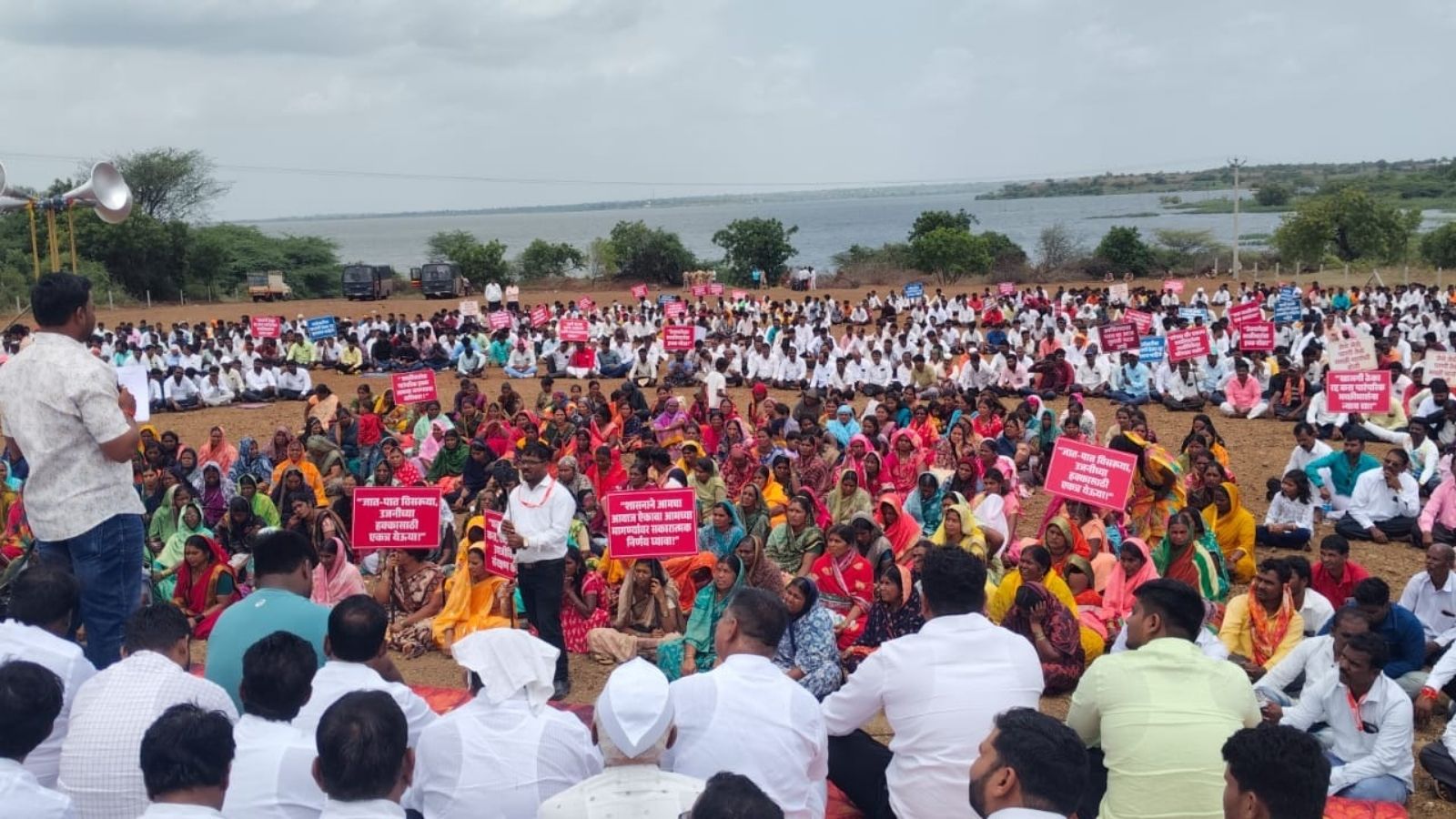
For thousands of families dependent on fishing in the Ujani reservoir, the proposed floating solar power plant and artificial intelligence (AI) data centre, among other projects, have raised concerns over the future of their livelihoods and the availability of water.
Nandkumar Nagare, chairperson of the Maharashtra Rajya Machhimar Sangharsh Kruti Samiti, said the fishing community’s dependence on the reservoir can be traced to the displacement caused by the construction of the Ujani dam. Thousands of farmers, including tribals, lost their agricultural land during the project and subsequently turned to fishing for their livelihood, he said.
“More than 30,000 people across Pune, Solapur and Ahilyanagar districts depend on fishing and allied activities such as transportation and marketing. Any project that affects water storage or availability will have serious consequences. People in Solapur are already getting water once every five days now. Further diversion of water for such projects could worsen the scarcity,” Nagare said, explaining the community’s opposition to the proposed projects.
Nitin Dole, a resident of Kumbhargaon who runs a bird guide and safari service, said the proposed floating solar plant in the dam’s catchment area could restrict fishing zones and reduce fish catches, affecting the income of local fishermen.
He also expressed concern over the possible impact on the area’s bird population, particularly flamingos, which prefer cooler temperatures. Citing changes he had observed in the nearby Shirsuphal grassland, Dole said, “The number of eagle species spotted during birdwatching had declined from around 15 to four in areas where solar projects had been installed.”
Moreover, on October 31, farmers and members of the fishing community staged a road blockade at Ranjani intersection on the Pune-Solapur highway, protesting against the proposed AI data centre and floating solar power plant, as well as other projects initially associated with the Ujani region.
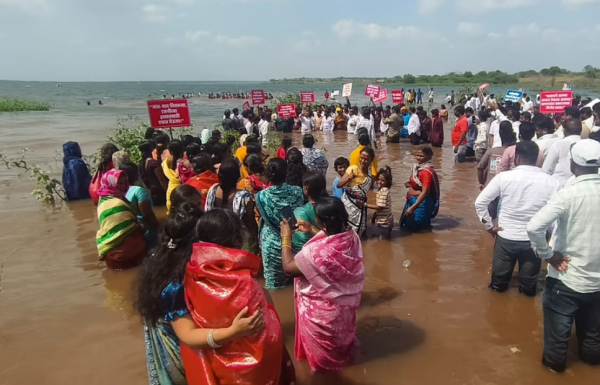 Fishermen wade into the Ujani reservoir during the protest at Palasdev on Monday. (Express Photo)
The protest was joined by NCP (SP) MLA Rohit Pawar, who alleged that the projects could have serious long-term consequences for agriculture and fishing communities. “These projects are highly polluting and pose an existential threat to agriculture and the fishing community. Their long-term adverse consequences will be severe. The AI data centre alone would require a staggering 9 TMC of water, while failing to generate any new employment and, instead, destroying agricultural livelihoods,” Pawar had said.
Story continues below this ad
He also alleged that projects capable of generating large-scale employment, such as semiconductor manufacturing, were being diverted to Gujarat, while projects with potentially adverse environmental consequences were being pushed in Maharashtra.
Pawar warned that any attempt to proceed without addressing public concerns would trigger a larger agitation. Several political leaders attended the protest, including senior leader Mahadev Jankar, MP Dhairyasheel Mohite-Patil, former MLA Sanjay Shinde, MLA Abhijeet Patil and newly elected MLA Dr Pratapsinh Patil.
The Solapur district administration, however, has maintained that the proposed project would bring substantial investment, generate employment and create opportunities in the information technology sector. Solapur Collector S Karthikeyan said it would also help improve local infrastructure.
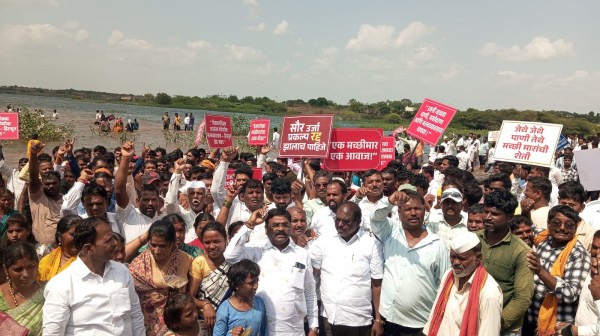 Fishermen wade into the Ujani reservoir during the protest at Palasdev on Monday. (Express Photo)
In a press release, the district administration clarified that the proposal comprises a 2,000 MW floating solar power plant, an 1,800 MW battery energy storage system and a 1.4 GW AI-based data centre. The state government signed a MoU for the project on April 16, 2026.
Story continues below this ad
According to the administration, electricity generated by the solar plant during the day would meet the data centre’s requirements, while surplus power would be stored in batteries for use at night.
The floating solar plant is proposed to cover 3,000 hectares of the Ujani reservoir’s total 33,630-hectare area at its Full Reservoir Level (FRL), leaving around 91 per cent of the reservoir open. The administration has said that locating the solar panels in deeper waters would allow fishing activities to continue in the remaining area. It has also maintained that sufficient sunlight would penetrate the water to sustain dissolved oxygen levels.
Responding to concerns over water consumption, the administration said the project would require only 0.42 TMC annually, with total consumption not exceeding 0.5 TMC. It said the data centre would use closed-loop, direct-to-chip cooling technology instead of conventional water-based cooling systems, keeping consumption low.
The administration further stated that the project would not generate industrial wastewater or chemical effluents as it did not involve any manufacturing activity. The coolant would remain within a closed piping system, with no treated or untreated wastewater discharged outside. Water quality testing and groundwater monitoring would be carried out as per Maharashtra Pollution Control Board (MPCB) conditions.
Story continues below this ad
It also clarified that the proposed Small Modular Reactor (SMR) nuclear power plant and green hydrogen project had been excluded from the proposal and would not be established in the Ujani Dam area.
For the first phase, the project proposes to use 415.75 acres of government-owned land. This includes 110.28 acres at Bhimanagar-Ranjani in Madha taluka of Solapur district, 90.39 acres at Taratgaon and 215.08 acres at Hingangaon, both in Indapur taluka of Pune district. An additional 174 acres may be considered in the second phase, subject to Forest Department clearance.
The administration has projected around 2,800 permanent jobs and 40,000 direct and indirect employment opportunities through the project. It has also estimated that the floating solar plant would generate around Rs 180 crore in annual revenue for the Maharashtra Krishna Valley Development Corporation, which would be used for the maintenance and repair of the Ujani irrigation project and its water distribution infrastructure.