
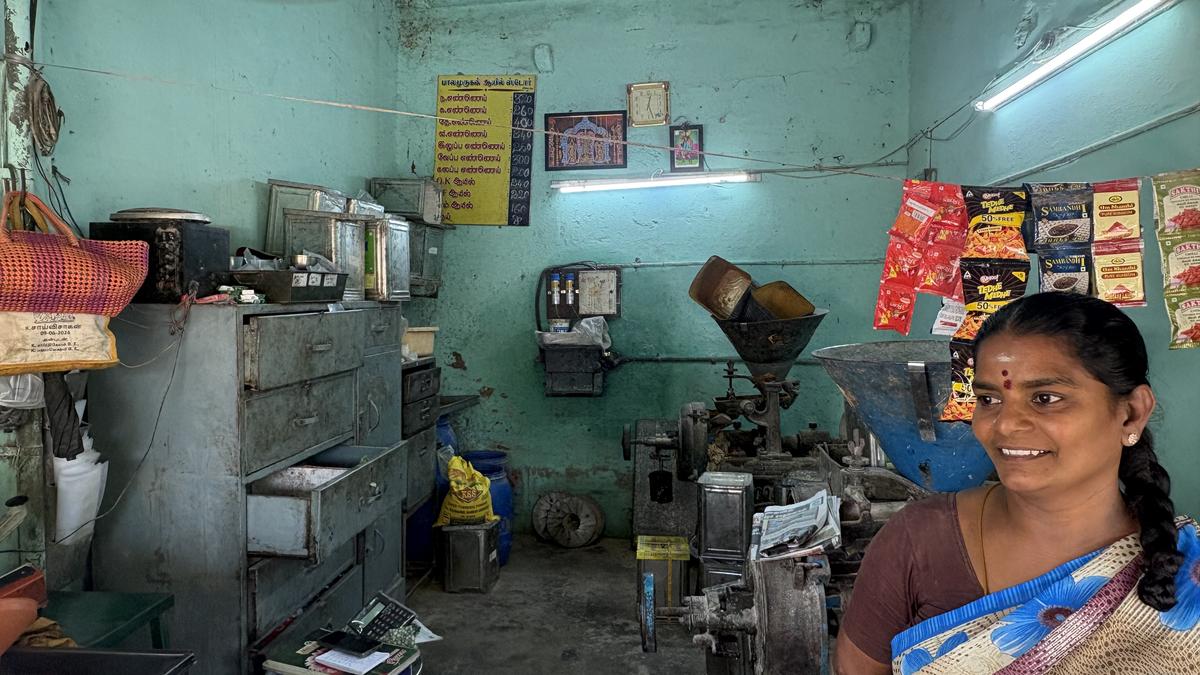

A small oil retail shop in Athavathur, Tiruchi district, where rising cooking oil prices have begun to impact sales.
| Photo Credit: Special Arrangement
Cooking oil prices have risen sharply in the past two weeks in Tiruchi, placing an added burden on household budgets and affecting the operations of eateries, with industry representatives warning of further increases if supply disruptions persist.
According to market sources, the price of sunflower oil has increased by ₹20 to ₹25 per litre, with retail rates rising from around ₹155 to ₹180–₹190. Palm oil, often considered a lower-cost alternative, has also seen an increase—from about ₹110 per litre to ₹122 in the wholesale market, with higher prices in retail.
Traders attribute the spike primarily to disruptions in crude edible oil imports amid the ongoing tensions in West Asia. Shipping routes have been affected and insurance costs for cargo have risen, pushing up landed prices. India depends heavily on imports to meet its edible oil demand, sourcing sunflower oil largely from Ukraine and Russia, palm oil from Indonesia and Malaysia, and soybean oil from Argentina.
“Sunflower oil availability is particularly sensitive because a significant share of global supply comes from Ukraine. Any disturbance there or in shipping routes immediately reflects in local prices,” said N. Arumugam of Jothi Oil Mill.
Wholesale dealers noted that existing stocks may last only about 10 days. “We are unable to predict prices. Fresh tanker arrivals will determine the next trend,” a trader said, adding that daily price revisions have become common.
The impact is also being felt across other edible oils. Groundnut oil prices have risen from around ₹110 per kg to ₹140, while mustard oil, which was about ₹100 per kg earlier this year, is now being sold at higher rates. Traders said a combination of import costs, taxes, and global uncertainties had contributed to the rise.
S. Sundaresan, district secretary of the Tiruchi Hotel Association, said eateries are already feeling the strain. “As of now, hotels are absorbing the costs. But if the situation continues, it will reflect in menu prices. Many fried items and dishes that require more gas are already being reduced,” he said.
Small eateries, in particular, have begun limiting preparation quantities and shortening operating hours to manage costs. Mr. Sundaresan also said the combined effect of rising oil and fuel prices could have a “retrospective impact” on food prices in the coming weeks.
Published – March 18, 2026 07:54 pm IST