
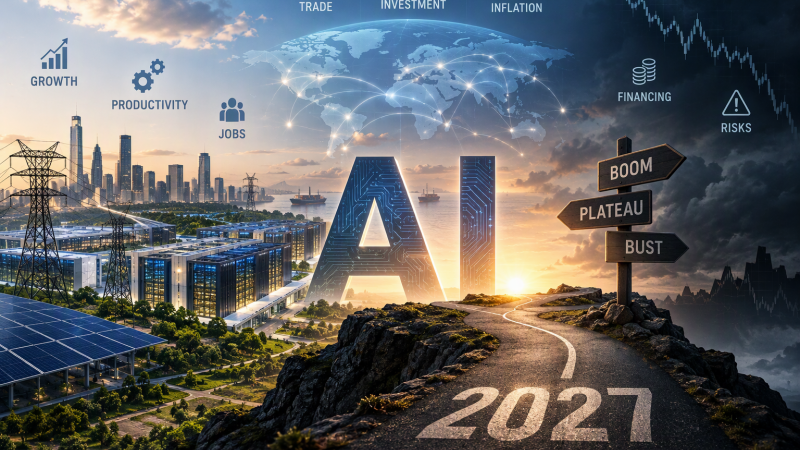
Bigger than the dotcom boom, more important for growth and, so far, more safely financed.
Investment in US data centre structures, computers and software reached 5.6% of GDP in the second quarter of 2026, up from 3.8% in 2022, or 5.2% once imported hardware is netted out. That already puts the current boom above the dotcom peak in 2000, when business investment in computers, communications equipment and software reached about 4.5% of GDP, although still below Britain’s railway mania of the 1840s, when railway investment alone reached roughly 6-7% of GDP.
So while this is not the biggest investment boom in history, it is already bigger than the last great technology boom. And it is having a much bigger economic impact: IT investment accounted for 16-18% of US GDP growth in 1998-2000; AI-related investment now accounts for 37%.
The biggest difference though is how this boom is being financed. Railways and telecom networks were built on debt and ended in defaults, largely through unrated railroad bonds in the 19th century and high-yield telecom debt after 2000. This time, investment has so far been funded mainly from the cash flows of some of the world’s most profitable companies, with debt and equity only now being added at the margin.
The assets are different, too. Rails and fibre lasted for decades. Data centre shells, grids and power plants will also have long lives, but GPUs may have an economic life of just three to six years. That much shorter shelf life is central to the debate over whether today’s investment will generate sufficient returns.
Still, the payoff could come faster. Factories took decades to redesign their floors around the electric motor. AI coding tools are paying off within months, and adoption is already disrupting software, accounting, online retail and advertising.
The common thread is that transformative technology does not necessarily mean good returns for those who finance the transformation. The Nasdaq lost almost 80% between 2000 and 2002, yet the fibre laid during the boom went on to underpin the streaming economy. Investors build the road; others get to drive on it.