
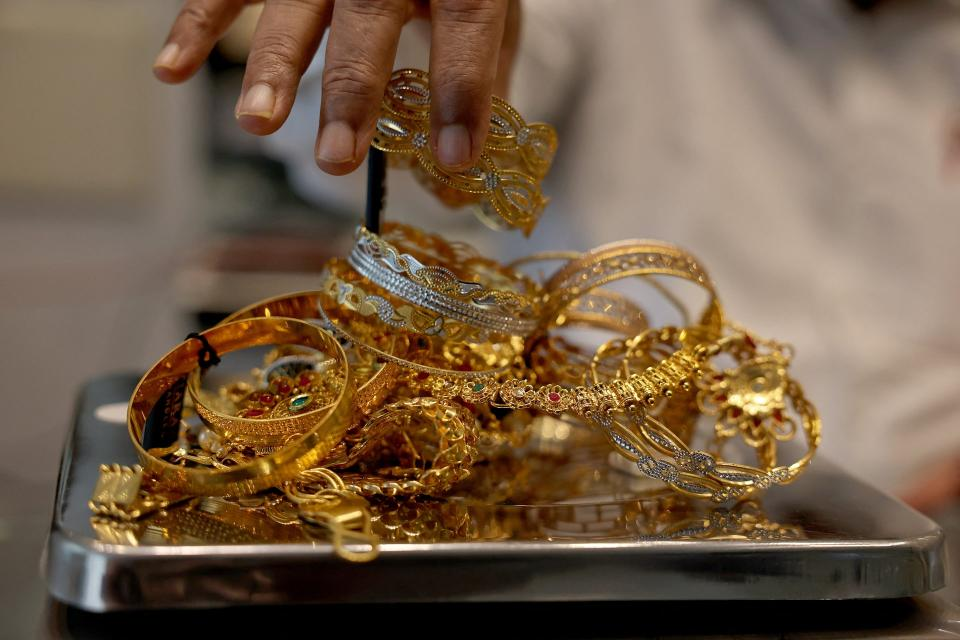
Gold and silver prices declined on Tuesday, November 3, reversing part of Monday’s recovery as renewed tensions in the Middle East pushed oil prices higher and strengthened expectations that the Federal Reserve will maintain restrictive monetary policy.
The retreat came as Americans headed to the polls for the midterm elections, with investors weighing the implications for fiscal policy, Treasury yields and the dollar.
Price overview
Spot gold fell approximately 1% to $3,908.49 per ounce by 08:30 GMT, while spot silver traded near $49.05 per ounce, down approximately 3.1%.
Gold remained below the psychologically important $4,000 level after Monday’s rebound.
Middle East tensions lift oil prices
Oil prices recovered following reports of a US strike on Iran’s Qeshm Island, raising concerns about renewed military escalation and prolonged disruptions to regional energy supplies.
Higher crude prices revived fears that energy-driven inflation could force central banks to maintain elevated borrowing costs.
Fed expectations weigh on bullion
Traders assigned approximately a 75% probability to another Federal Reserve interest rate increase in December.
Higher interest rates generally undermine demand for non-yielding assets such as gold and silver, particularly when accompanied by rising Treasury yields.
US elections in focus
Tuesday’s congressional elections could reshape expectations for government spending, taxation and financial regulation.
A divided Congress could complicate President Donald Trump’s fiscal agenda, while a contested outcome could increase short-term market volatility.
Market outlook
Gold faces immediate support around $3,900, followed by $3,875, while resistance stands near $3,950 and $4,000.
Silver remains vulnerable below $50, with support around $49 and resistance near $50.90.
Further gains in oil prices could prolong the metals’ correction, although election-related uncertainty may provide some support for safe-haven demand.