
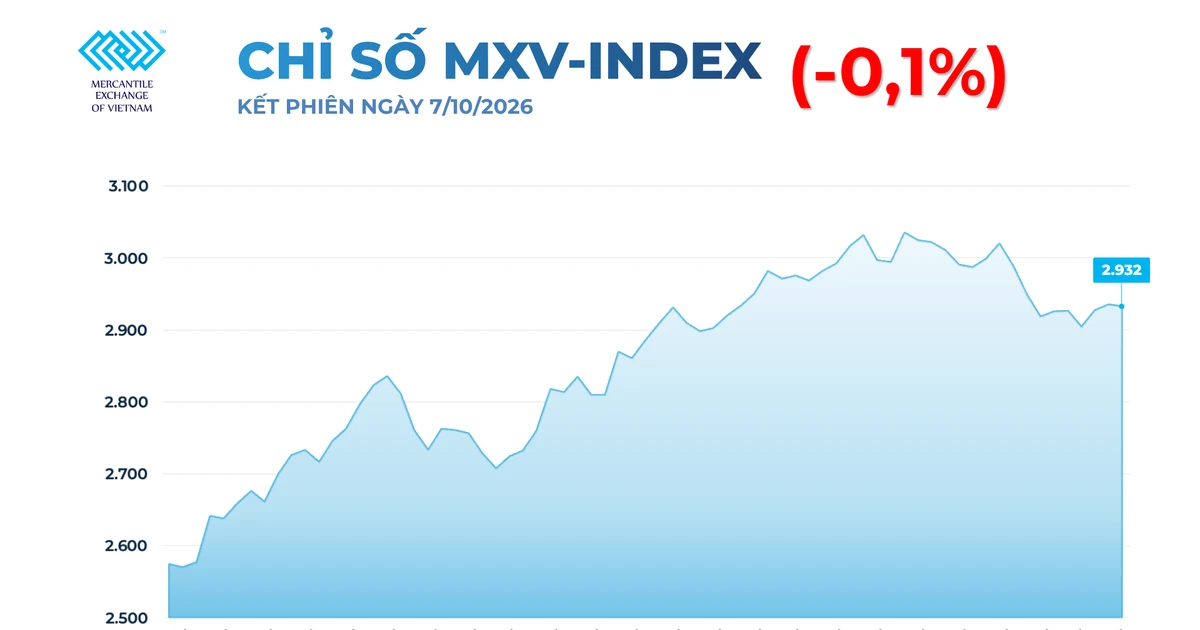
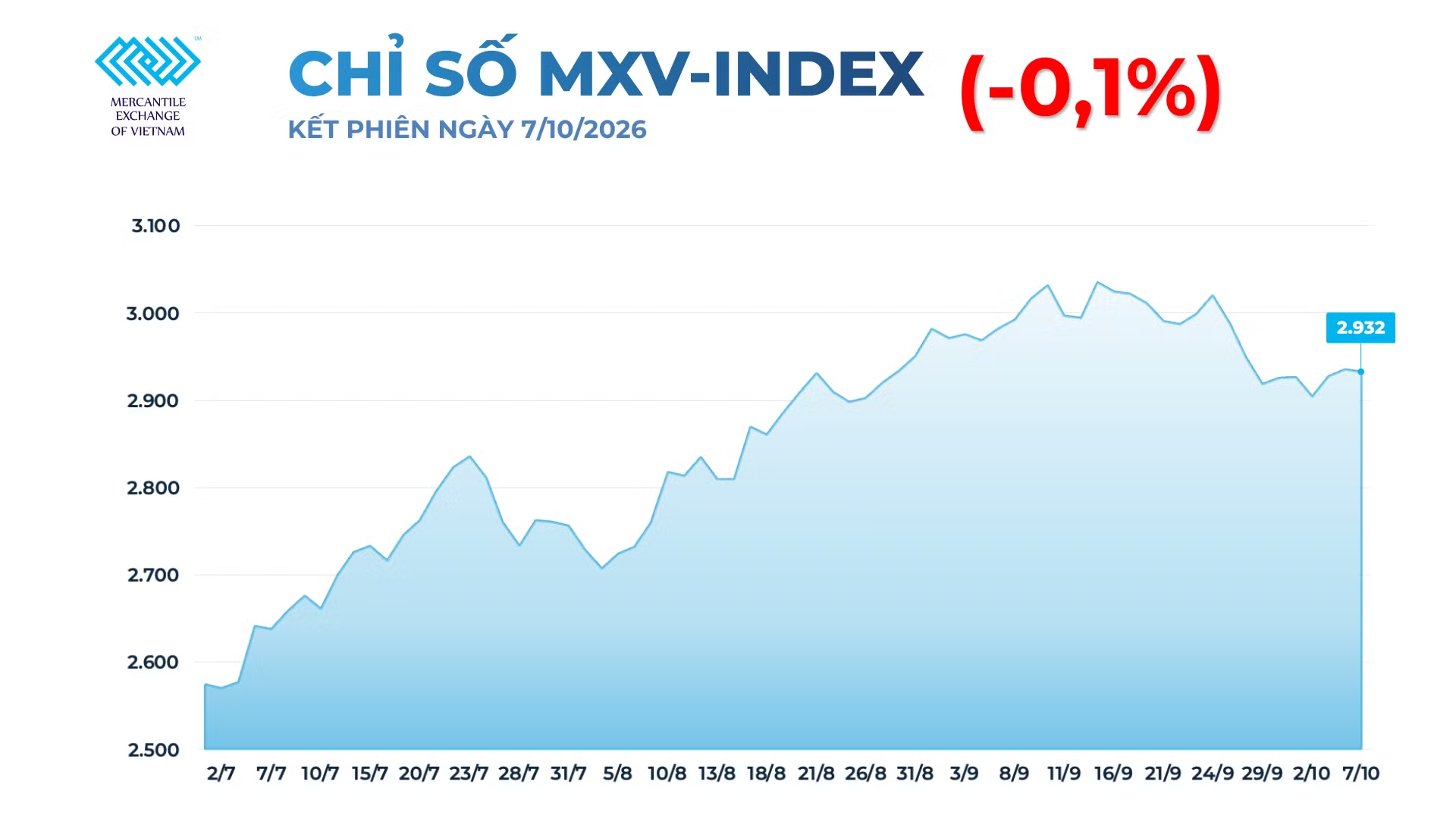
Crude oil prices have turned downward.
According to the Vietnam Commodity Exchange (MXV), two crude oil commodities attracted attention from domestic and international investors as they moved in the opposite direction to the energy sector. At closing, Brent crude fell 0.38% to $100.2 per barrel, while WTI crude fell 1.3% to $88.28 per barrel. Oil prices were pressured as oil exports from the Middle East showed signs of recovery after a period of disruption.
According to Vitol, in the preceding 7-10 days, approximately 12 million barrels of crude oil and 2 million barrels of petroleum products per day were being transported out of the Middle East. Meanwhile, data tracking flows through the Strait of Hormuz showed that oil flow had recovered to around 14.2 million barrels per day, equivalent to about 80% of pre-conflict levels.
In Saudi Arabia, the East-West pipeline is undergoing significant restoration. The Saudi Energy Minister stated that oil flow through the pipeline has increased to approximately 5.8 million barrels per day, up from around 3.5 million barrels per day in the initial stages of restoration. The pipeline plays a crucial role in transporting oil from eastern Saudi Arabia to export facilities on the Red Sea coast, thereby reducing reliance on the Hormuz route.
According to JPMorgan, crude oil exports from the Middle East have recovered to approximately 17.5 million barrels per day, equivalent to 98% of pre-conflict levels. However, the flow of refined oil products has recovered to approximately 3 million barrels per day, equivalent to 58% of pre-conflict levels. This indicates that crude oil supply has recovered significantly faster than refined oil products.
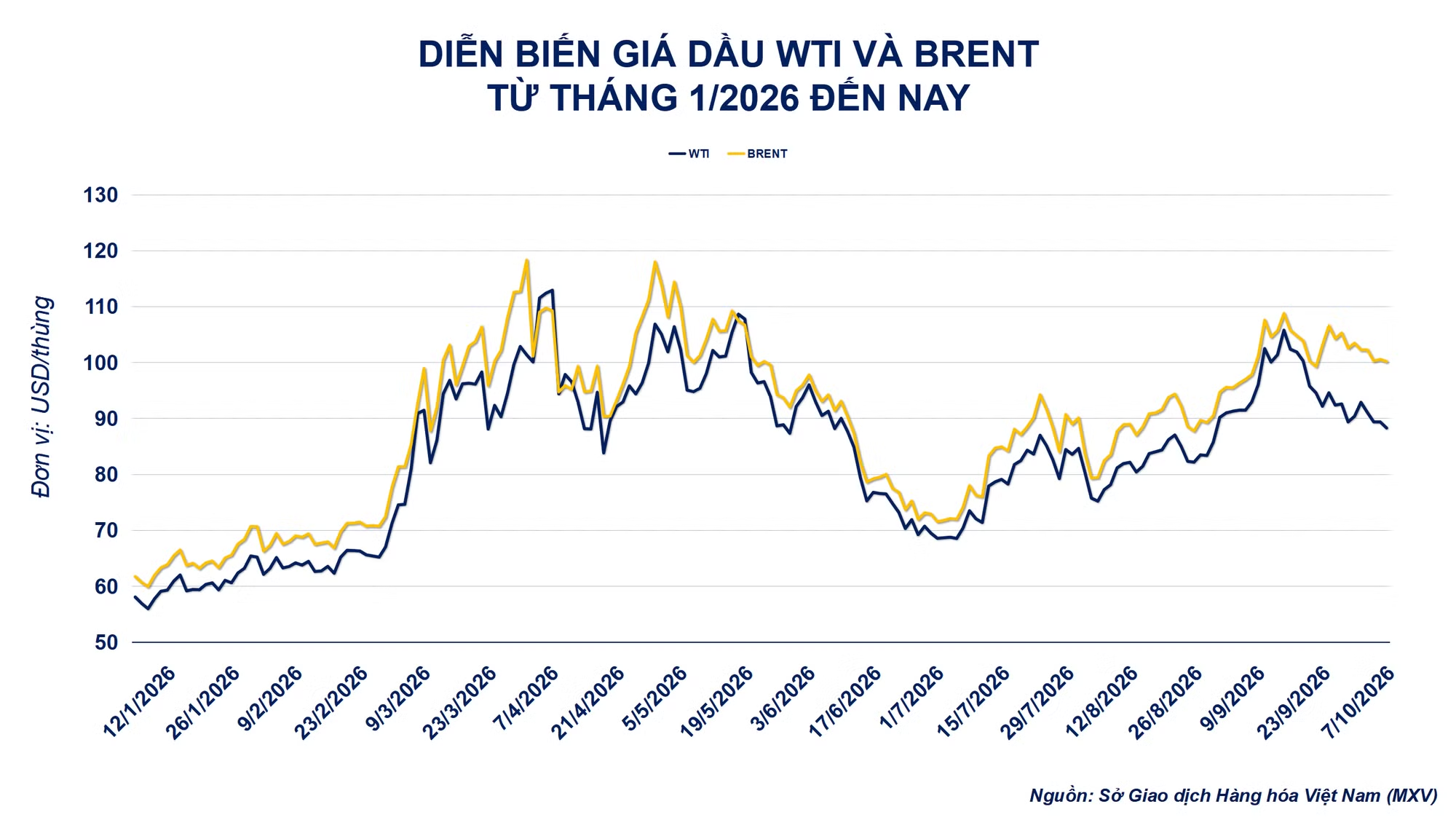
Besides the recovery in supply, the prospect of weaker demand is also putting further pressure on oil prices. In its updated Short-Term Energy Outlook report on October 6th, the US Energy Information Agency (EIA) projected global demand for oil and other liquids in 2026 to reach approximately 102.4 million barrels per day, down from 104.4 million barrels per day in 2025. The EIA also projected demand to rebound to 104.6 million barrels per day in 2027.
Oil supplies in the Middle East are gradually recovering, while the outlook for global demand is weakening, helping to ease the pressure of shortages in the market. However, the risk of disruptions to transportation and energy infrastructure in the region still makes it difficult for oil prices to fall significantly.
Flows through the Strait of Hormuz have improved significantly, but shipping operations still face geopolitical risks and high transportation and insurance costs. Therefore, the recovery in export production does not necessarily mean that the global oil supply chain has returned to full normal.
Meanwhile, the US oil market continues to show some supportive signals. According to the EIA, US commercial crude oil inventories for the week ending October 2nd decreased by approximately 3.2 million barrels, contrary to market expectations of an increase. US crude oil exports this week reached approximately 4.77 million barrels per day.
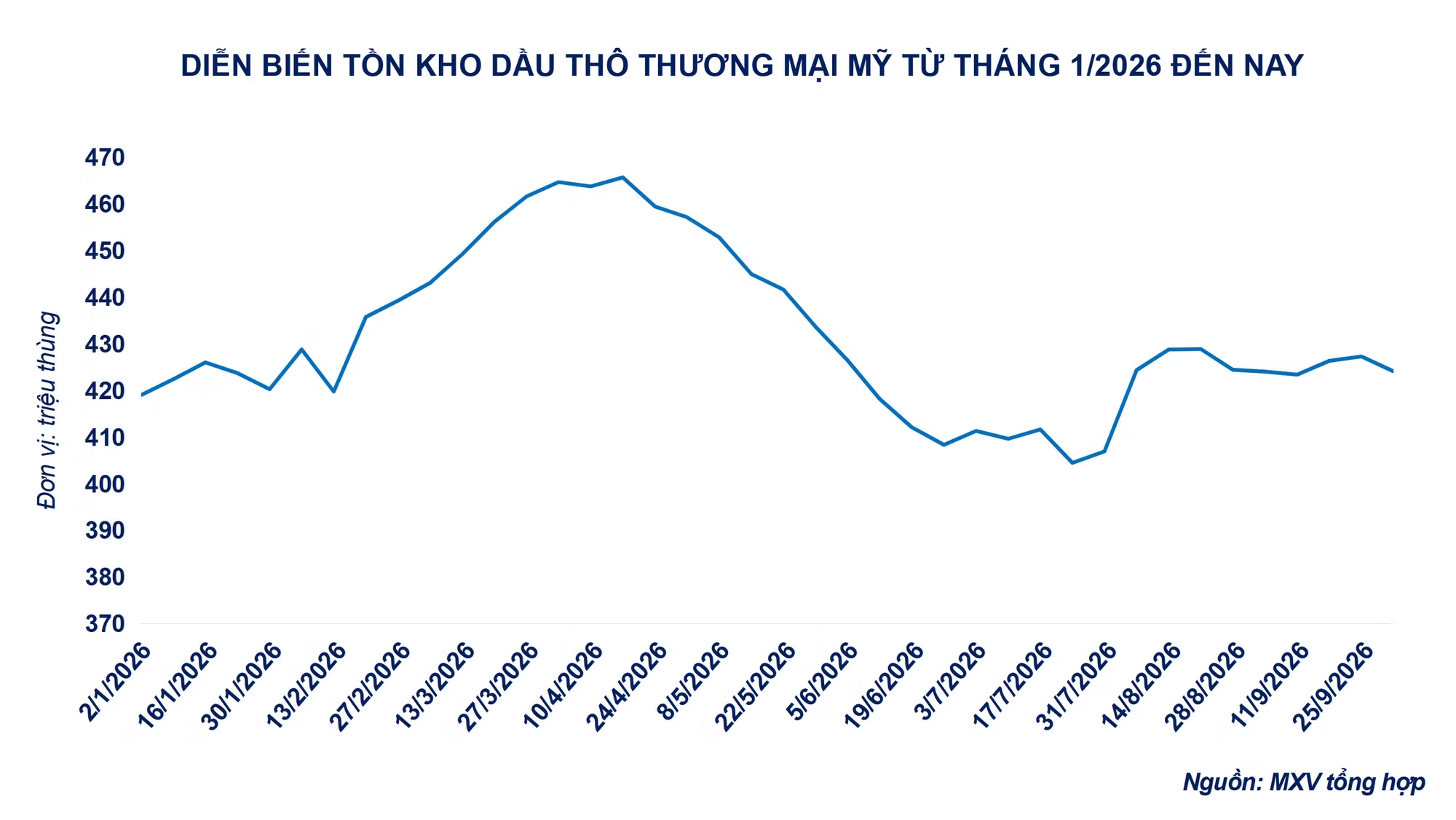
According to Mr. Do Xuan Quy, Deputy General Director of 3D Commodity Trading Joint Stock Company (TVKD No. 072 of MXV), the downward pressure on oil prices also stems from the IEA’s plan to accelerate the release of oil reserves, thereby helping to alleviate concerns about short-term supply shortages. However, US crude oil inventories fell sharply in the week ending October 2nd, contrary to expectations of an increase, indicating that demand in the US market remains relatively positive. US crude oil exports also remained high, continuing to support global trade flows.
“In the short term, oil prices continue to receive support from geopolitical risks and uncertainties in trade flows, although Middle Eastern supply is gradually recovering and the release of oil reserves is a limiting factor for further increases. The crude oil market may continue to maintain high volatility as supply, demand, and geopolitical factors constantly change. Investors need to closely monitor developments in the Middle East, especially shipping activity through the Strait of Hormuz and the 100-102 USD/barrel price range for Brent,” Mr. Quy commented.
On the morning of October 8th, oil prices recovered as the risk of supply disruptions in the Middle East increased. Brent briefly surpassed $101 per barrel, while WTI advanced to around $89 per barrel as attacks on shipping in the Gulf and the Hormuz region heightened concerns about potential disruptions to oil flows.
The Fed leaves open the possibility of another interest rate hike, putting pressure on precious metals.
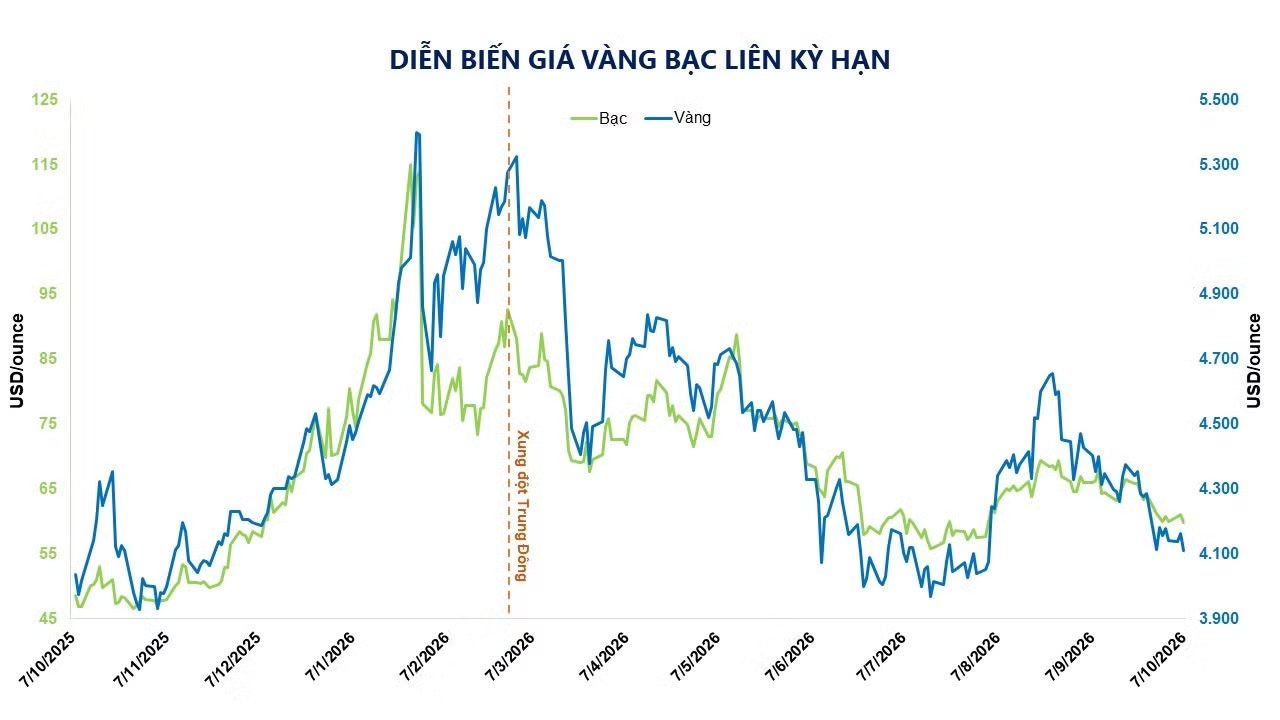
In the metals market, precious metals also faced strong selling pressure yesterday. According to MXV data, gold prices fell 1.3% to $4,110.5 per ounce, while silver prices dropped 2.1% to $59.9 per ounce. On the spot market, gold prices also fell sharply, at one point reaching their lowest level since early August.

Pressure on precious metals mainly stems from a strengthening US dollar and rising US bond yields. Minutes from the Federal Reserve’s September meeting showed all attendees supported a 25 basis point interest rate hike. However, Fed officials still held differing views on the reasons for tightening policy and the future trajectory of interest rate adjustments. Most members believed the Fed could raise interest rates again before the end of the year if economic conditions were favorable.
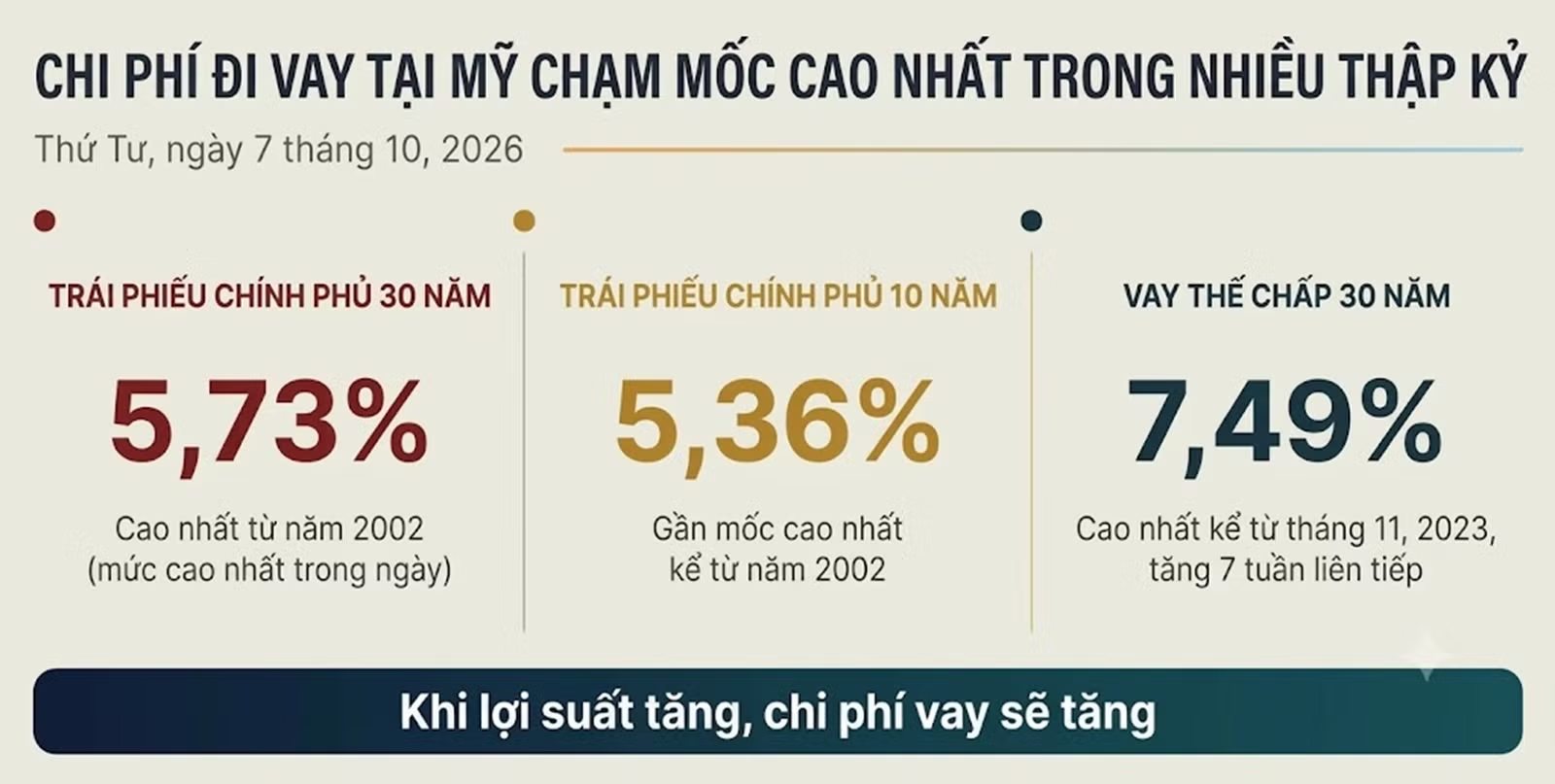
Following the release of the minutes, the DXY index rose 0.41%, nearing its highest level in about 1.5 years. Meanwhile, the yield on 10-year US Treasury bonds briefly surged to 5.36%, its highest level in about 24 years. The sharp increase in yields heightened the opportunity cost of holding non-yielding assets like gold and silver.
Notably, silver is under stronger pressure than gold due to its dual nature as both a monetary asset and its high dependence on industrial demand. According to industry data, industrial demand accounts for approximately 58% of total global silver demand. Therefore, in addition to the impact of the US dollar and yields, silver is more sensitive to economic growth prospects and investment activity, especially in silver-intensive sectors such as electronics, solar energy, and power infrastructure.
However, selling pressure on precious metals remains limited by hedging demand and concerns about global financial risks. Total global debt increased by approximately $10 trillion in the first half of the year, reaching a record high of over $365 trillion at the end of June, according to the Institute of International Finance (IIF). This figure includes debt of governments households, financial institutions, and non-financial businesses.
In particular, fiscal pressure is increasing in many major economies as yields on medium- and long-term government bonds rise to their highest levels in years. Rising interest costs could narrow fiscal space and increase risks to long-term economic growth.
In the U.S., sharply rising bond yields have pushed 30-year fixed-rate mortgage rates to 7.49%, the highest level since late November 2023. Tighter financial conditions are also putting pressure on the commercial real estate market. Trepp data shows that the percentage of delinquent office loans in the commercial loan securitization market (CMBS) rose to around 12.2% in September, about 1.5 percentage points higher than the peak of the 2008 financial crisis and only slightly lower than the 12.3% recorded in January 2026.
Risks associated with debt, capital costs, and economic growth are among the factors that sustain safe-haven demand for gold, even as the USD and yields are putting downward pressure on prices.
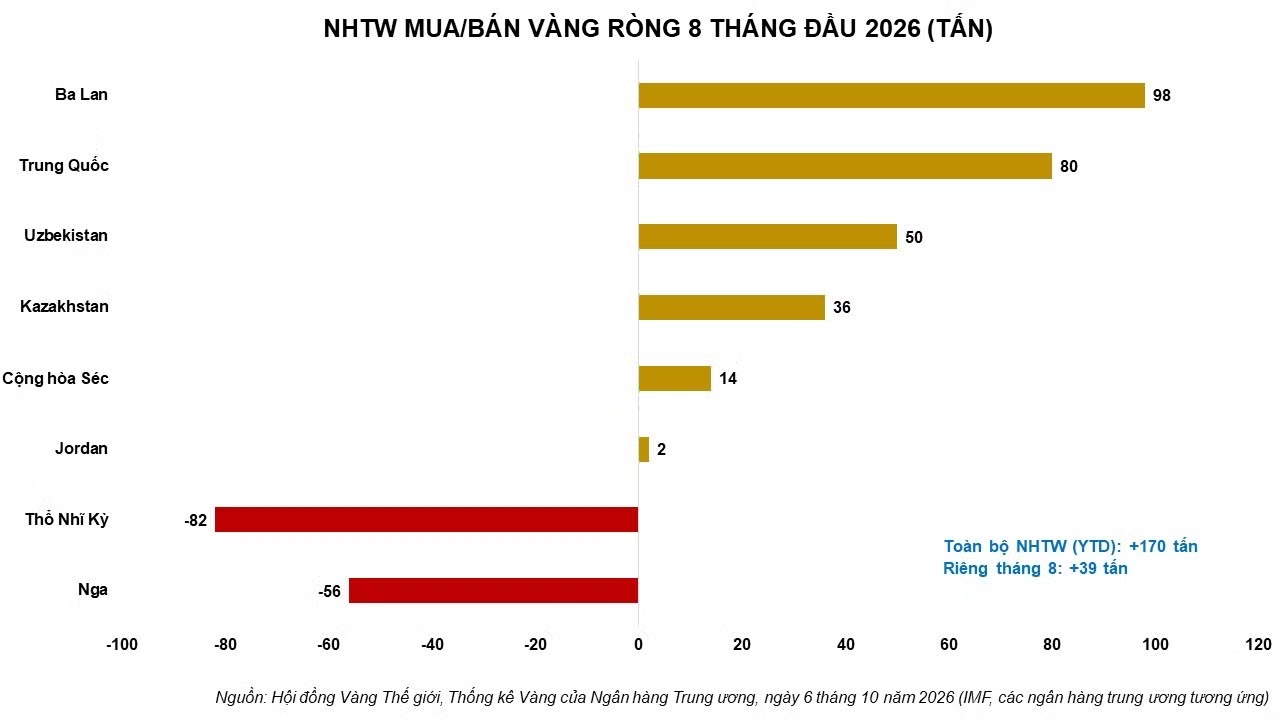
Furthermore, structural buying from central banks continues to be a key supporting factor for the gold market. According to the World Gold Council (WGC), central banks made net purchases of 288.9 tonnes of gold in the second quarter of 2026, a 62% increase year-on-year. This is the highest level of purchases in the history of WGC’s second-quarter data.
In August, central banks continued their net purchases of gold, adding 39 tons, bringing the total net purchases since the beginning of the year to approximately 170 tons. Poland continued to lead with an additional 98 tons of gold purchased since the beginning of the year, raising its reserves to around 648 tons, nearing the 700-ton target.
In China the People’s Bank of China (PBOC) has also maintained a trend of accumulating gold for several consecutive months, indicating that the need to diversify reserves remains a long-term driver for the market.
Along with gold and silver, platinum also came under strong selling pressure on October 7th. Platinum futures prices fell by approximately 3.5%, retreating to around $1,633 per ounce.
Besides the impact of the USD and yields, the supply and demand outlook is also putting further pressure on this metal. According to the World Platinum Investment Council (WPIC), the platinum market is projected to have an oversupply of approximately 265,000 ounces in 2026. Total demand is expected to decrease by 18%, with weakening investment demand being the main factor, as WPIC forecasts investors will be net sellers of approximately 83,000 ounces for the entire year.
In terms of consumption, WPIC forecasts a 15% decline in jewelry demand in China for the entire year, while demand from the automotive sector is projected to fall by 4%. Conversely, industrial demand is forecast to increase by 5%, partially offsetting the declines in other demand groups.
Supply pressures could also increase in the medium term as Mutapa Platinum Group, a Zimbabwean state-owned enterprise, has raised $100 million to restart the Darwendale project. The project has estimated resources of around 44 million ounces of platinum group metals (PGMs), with civil construction already underway and production expected to begin in 2027.
According to the Vietnam Commodity Exchange (MXV)
Source: https://baotintuc.vn/gia-dau-brent-van-quanh-100-usd-du-nguon-cung-trung-dong-da-phuc-hoi-post1392391.html