
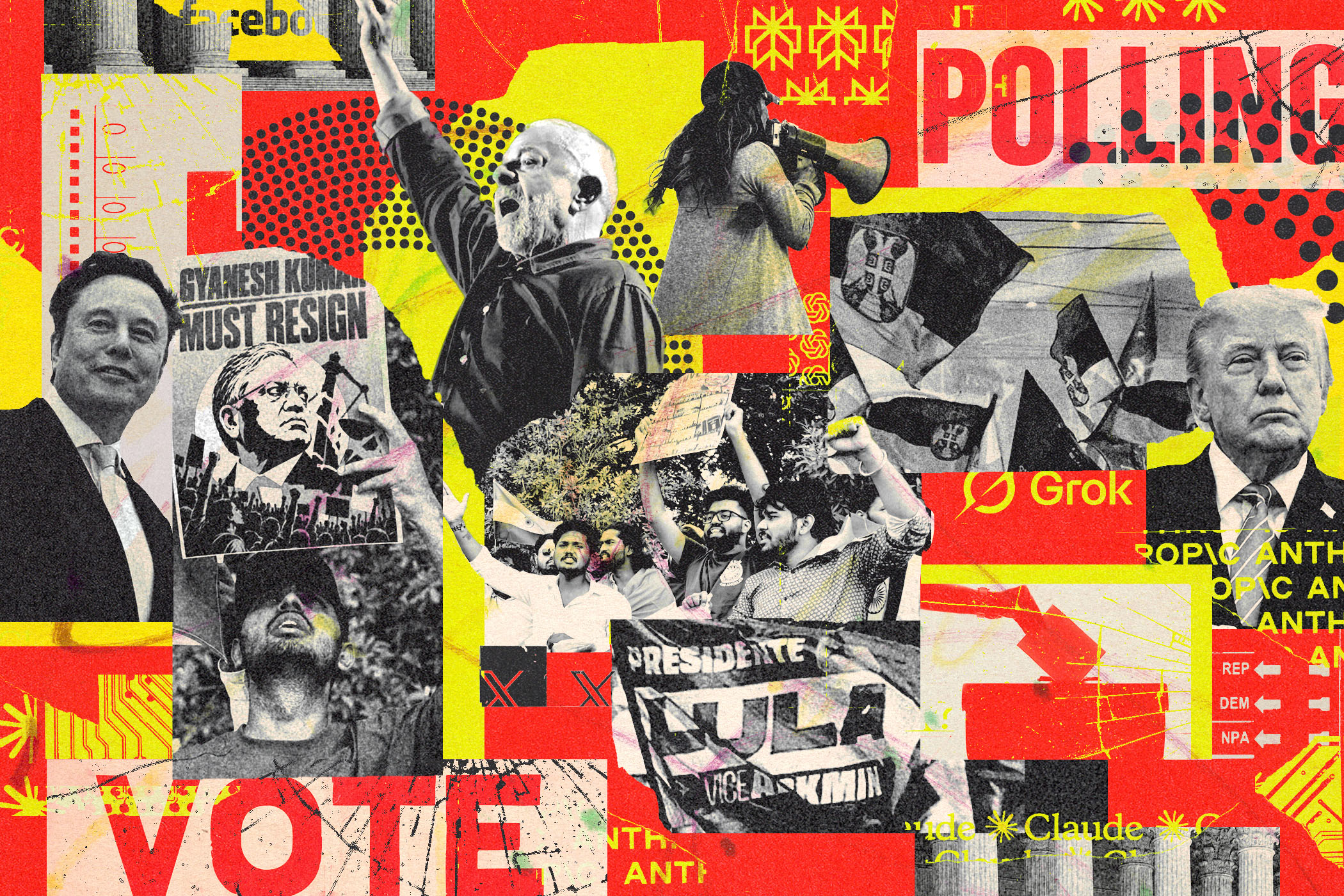
October was a bad month for dictators. In Brazil, voters turned out in numbers not seen in two decades to re-elect Luis Inácio Lula da Silva over Flavio Bolsonaroson of the former president convicted of plotting a coup. In Serbia, on Europe’s doorstep, a movement born from student protests ended Aleksandar Vučić’s more than 14-year grip on power.
But elected dictators weren’t the only ones who lost. In the United States, a judge ordered Mark Zuckerberg’s Meta to pay $25bn for deceiving users about its data privacy practices. A few days earlier, Character.AI – the chatbot company that settled lawsuits brought by grieving families whose teenagers died by suicide or suffered severe harm after talking to its bots – filed for bankruptcy, blaming the legal and regulatory pressure that finally caught up with it.
At first glance, a Serbian strongman and a Silicon Valley chatbot company have little in common. One commands a state, the other keeps us glued to the screen. But in the Philippines, I learned the hard way that they are two halves of the same problem. In 2016, my newsroom Rappler began investigating the killings in former Philippines president Rodrigo Duterte’s drug war. Soon, I was receiving an average of 90 hate messages an hour on Facebook, then the world’s largest distributor of news, and effectively the internet in my country. These messages were part of a coordinated, state-sponsored campaign of disinformation and harassment – led by Duterte’s government and amplified by Facebook – that culminated in 11 warrants for my arrest.
I call them the two dictators: the strongmen who seize power, and the tech CEOs who profit from the platforms that help them “flood the zone”. They need each other. Platforms profit when lies spread faster than facts, because fear and anger keep us scrolling. Strongmen exploit that design to sow disinformation, distract citizens and erode trust in the institutions built to hold them accountable. The strongman gets a megaphone; the tech CEO gets engagement and profit. The Philippines was the test case. The playbook has since gone global: from Donald Trump in America to Nayib Bukele in El Salvador.
But in the decades-long global shift towards authoritarianism, it’s important to remember that the people have a playbook, too. I call it the “fight back” – and Brazil and Serbia have just shown us how to use it. The lessons from this month can be leveraged as other democracies around the world head to the polls, including next week in the US and in the coming years in the UK.
First, we need to move beyond the virtual world and build an in-person movement – a lesson we learned at Rappler and in the Philippines. At the worst of times, we moved out of the virtual line of fire and built real-world communities of action. It’s a simple proposition, but one of the best ways to reclaim our humanity is to be human: meet people, walk with them, hold their hands. In Serbia, students who gathered in squares and cycled across the country built trust that no algorithm could break. In Brazil, Lula supporters took to the streets in numbers the country hadn’t seen for years, and which many credit with helping secure his come-from-behind win.
Of course, this doesn’t mean technology can’t play a role. In fact, technology helped organise many of these campaign events, particularly in Brazil. But organising cannot stay exclusively online. Real-life mobilisation is crucial – coming together to create a shared reality that cannot be distorted. Courage is contagious, but you have to be close enough to catch it.
It’s a simple proposition, but one of the best ways to reclaim our humanity is to be human – meet people, walk with them, hold their hands
It’s a simple proposition, but one of the best ways to reclaim our humanity is to be human – meet people, walk with them, hold their hands
Second, we need robust, independent journalism. There’s a reason Rappler was the target of Duterte’s administration: journalism is the vaccine against lies. In Serbia, independent journalists continued to work even as they were under siege, with watchdogs documenting more than 150 attacks on journalists this year alone. In Brazil, independent fact-checkers worked overtime to counter a deluge of online disinformation. And in the final stretch of the campaign, Brazilian journalist Patrícia Campos Mello uncovered internal Meta messages acknowledging that its restrictions had hurt Lula’s Instagram accounts and recommended Bolsonaro’s profile – evidence of Meta’s interference in the election that Brazilian authorities have since referred to federal prosecutors. In both countries, independent journalists held the line. And when they did, citizens had something the two dictators couldn’t overcome: shared facts to organise around.
Finally, we need to protect the vote. The two dictators won’t go down without a fight, which means we’re going to see more attempts to discredit election results that threaten their hold on power. We’re already seeing this with Flávio Bolsonaro in Brazil and with Donald Trump in the US, as he and his allies lay the groundwork to contest a potential Democratic wave in next week’s midterm elections. Anticipating disinformation – and the acts that come with it – is how we prevent it. Journalists, election officials and civic leaders must raise the alarm early and often. We must demand that platforms put real guardrails in place and restore those they’ve disbanded, such as Meta’s third-party fact-checking programme in the US. And we must continue to update our election laws and processes to defend against tech-fuelled disinformation.
I hope that we will look back on this month as a turning point in the fight for global democracy. But it’s only the start. Next week, it’s America’s turn. Then it will be Britain’s. The two dictators – the strongmen and tech CEOs – are counting on us to stay home, keep scrolling and choose the salacious lie over the cold hard truth.
Don’t let them win. Keep showing up for each other, keep funding the facts and keep protecting the vote. The fight back is already under way.
Maria Ressa is CEO of Rappler and recipient of the 2021 Nobel peace prize. Her new book, The Fight Back: A Citizen’s Guide to Defeating Dictators, is available now.
Illustration by Mr.Nelson Design