
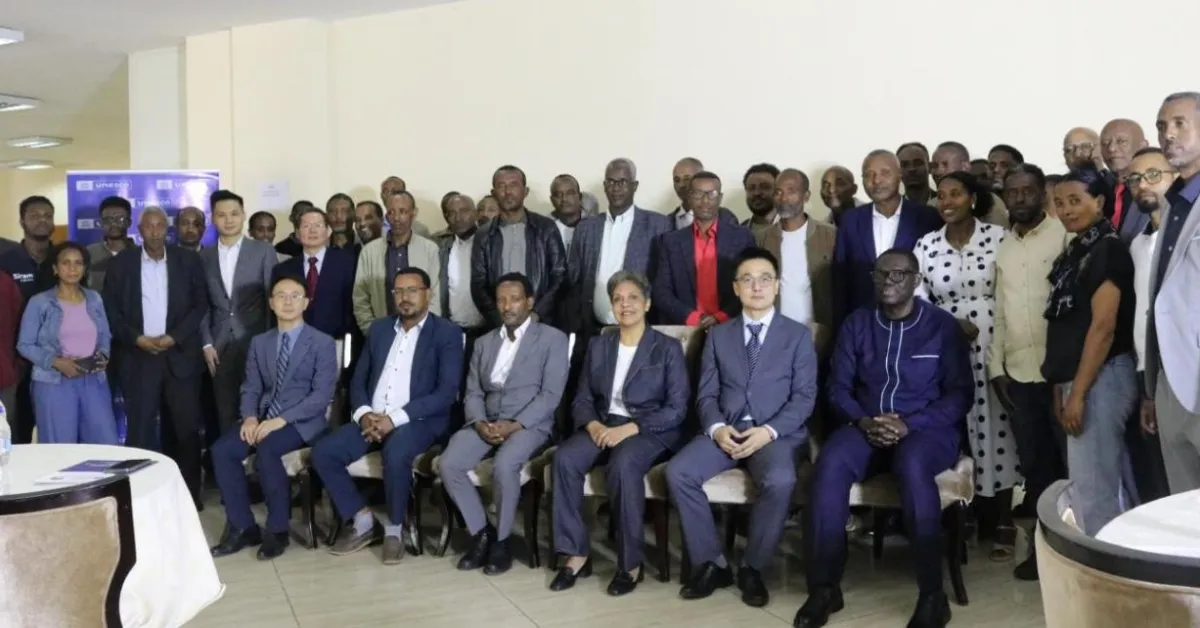
In Ethiopia, the project focused on Grades 9 and 10, particularly science subjects and English, combining digital infrastructure, teacher capacity development, digital pedagogy and curriculum-aligned content. It supported 24 pilot secondary schools, reaching approximately 12,000 students and 250 educators.
In 2023, the schools received 480 tablets, 48 laptops, 48 Wi-Fi routers/access points and 24 smartboards to support technology-enabled teaching and learning. The project also developed an EdTech Training Manual and digital platform for online and offline training, with more than 350 educators trained, alongside a Digital Content Development Manual, ICT Integration/Implementation Guidelines for Secondary Schools and studies generating recommendations for technology-enabled pedagogy. An online Community of Practice enabled educators to exchange experiences and provide peer support.
A major achievement was the development of 150 multimedia-rich digital learning contents for Grades 9 and 10 in science and English, incorporating video, graphics, motion and interactive features. The content was designed to be curriculum-aligned, pedagogically sound, accurate, inclusive and accessible, while supporting scientific reasoning, experimentation and problem-solving.
At the closing event, Dr. Rita Bissoonauth, Director of the UNESCO Liaison Office in Addis Ababa, emphasized the project’s people-centred approach: