- 0
- 598 words
To sign in to the AWS Management Console as an IAM user, you must enter your user ID or account alias. When an administrator created an IAM user in the console and signed in, they should have been sent sign-in credentials, such as the URL of the account sign-in page that includes the username and account ID or account alias.
https://My_AWS_Account_ID.signin.aws.amazon.com/console/To bookmark your account’s sign-in page in your web browser, you must manually enter your account’s sign-in URL into the bookmark entry. Please do not use your web browser’s bookmark function. This is because redirects make the sign-in URL unclear.
You can also manually enter your account ID or account alias by signing in with the following general sign-in endpoint:
https://console.aws.amazon.com/For your convenience, the AWS sign-in page uses a browser cookie to remember your IAM username and account information. The next time a user navigates to any page, the AWS Management Console uses a cookie to redirect the user to the account sign-in page.
You can only access AWS resources that an administrator specifies in the policy associated with your IAM user ID. To interact with the console, users must have permission to perform the actions that the console performs, such as listing and creating AWS resources. For more information, seeAWS resource access management” and “IAM identity-based policy example”.
If your organization has an existing identity system, you can create a Single Sign-On (SSO) option. SSO allows users to access your account’s AWS Management Console without having to have an IAM user identity. SSO also eliminates the need for users to sign in to your organization’s site or sign in to AWS separately. For more information, seeEnabling custom identity broker access to the AWS console”.
Logging sign-in details with CloudTrail
If you enable CloudTrail to record sign-in events in your logs, you should be aware of how CloudTrail chooses where to log events.
-
When users sign in directly to the console, they are redirected to a global or regional sign-in endpoint, depending on whether the console for the selected service supports regions. For example, the main console home page supports regions, so if you sign in to the following URL:
https://alias.signin.aws.amazon.com/consolehttps://us-east-2.signin.aws.amazon.comand results in a regional CloudTrail log entry in the logs for that region.On the other hand, the Amazon S3 console does not support regions, so if you sign in to the following URL:
https://alias.signin.aws.amazon.com/console/s3By AWS
https://signin.aws.amazon.comYou will be redirected to the global sign-in endpoint at , resulting in a global CloudTrail log entry. -
You can manually request a specific regional sign-in endpoint by signing in at the regional main console home page using a URL syntax similar to the following:
https://alias.signin.aws.amazon.com/console?region=ap-southeast-1By AWS
ap-southeast-1You will be redirected to the regional sign-in endpoint and CloudTrail log events for that region.
For more information about CloudTrail and IAM, seeLogging IAM events with CloudTrail”.
If your users require programmatic access to operate your account, you can create an access key pair (access key ID and secret access key) for each user. However, there are more secure alternatives to consider before creating access keys for your users. For more information, seeAWS general reference“of”Considerations and alternatives for long-term access keys”.
Other resources
For more information about AWS Sign In, see the following resources:
Author

adspopofficial@gmail.com
Related posts

Apparatus – Wikipedia
- 0
- 1,120 word
Iranian video sharing service Apparatus Native name Apparatus Website type Video hosting services Available in Persian, English Founded April 13, 2011; 15...
Read out all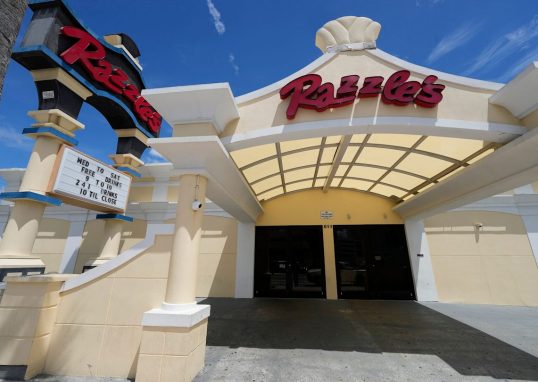
Razzle’s settled wrongful death lawsuit just before closing
- 0
- 833 words
A week before The Daytona Beach News-Journal reported that Razzle’s Nightclub in Daytona Beach would be closing, the Seabreeze Boulevard fixture settled...
Read out all
Milan Stock Exchange, Technoprobe in volatility auction down more than 6%, STM worsens after weak Nasdaq open
- 0
- 656 words
Below are updates on trading on the Milan Stock Exchange: 3:40 p.m. – TECHNOPROBE in a volatility auction after falling 6.37% following...
Read out all
Download the stylish Ken Young song by Navid Babe and Berdia + song text • Horadi
- 0
- 265 words
Ken Young’s stylish song Navid Babe and Berdia Download the new song of Young Navid Babe and Berdia called “Shik Ken”. Download...
Read out all
Bambu Lab’s H3C Announced Today Is a Powerhouse
- 0
- 1,398 word
Bambu Lab H3C Multi-nozzle printing to the max Pros & Cons Large build area allows you to maximize the nine tool heads...
Read out allStop using Feedly: I found 2 better RSS reader apps on Android
- 0
- 1,316 word
Khamosh Pathak / Android Authority Add Android Authority on Google: Almost every morning plays out the same in my home. Eggs for...
Read out all