
The U.S. just experienced its hottest summer on record, but Atlanta’s numbers tell a different story. Here’s how hot it actually got.
ATLANTA, Georgia — If you thought this summer was hot, you certainly weren’t wrong. But Atlanta’s summer may not have been quite as remarkable as what happened across the country.
Meteorological summer, which includes June, July and August, is officially in the books, and nationally, it was one for the record books.
NOAA says the contiguous United States just experienced its hottest meteorological summer on record. The average temperature across the Lower 48 from June through August was 74.4 degrees, topping the previous record by 0.4 degrees.


But here in Atlanta, the story was a little different.
Atlanta never reached 100 degrees
Despite plenty of hot and humid afternoons, Atlanta did not officially reach 100 degrees during meteorological summer 2026.
The hottest temperature recorded in Atlanta this summer was 98 degrees.
That may be surprising considering some afternoons certainly felt hotter than that. High humidity frequently pushed heat index values into the triple digits even when the actual air temperature stayed below 100.
That distinction matters. The heat index describes how hot it feels when humidity is factored in, while Atlanta’s official temperature is the actual measured air temperature.
June started relatively tame
June wasn’t particularly extreme when it came to Atlanta’s daytime temperatures.
The average high for the month was 87.1 degrees, essentially right where Atlanta would normally be in June.
The nights were a different story. Atlanta’s average low was 70.3 degrees, about 1.7 degrees warmer than normal.
That’s important because warm overnight temperatures give people, buildings and infrastructure less of an opportunity to cool down after a hot day.
July and August brought the summer heat
As you might expect, July brought some of Atlanta’s hottest weather of the season.
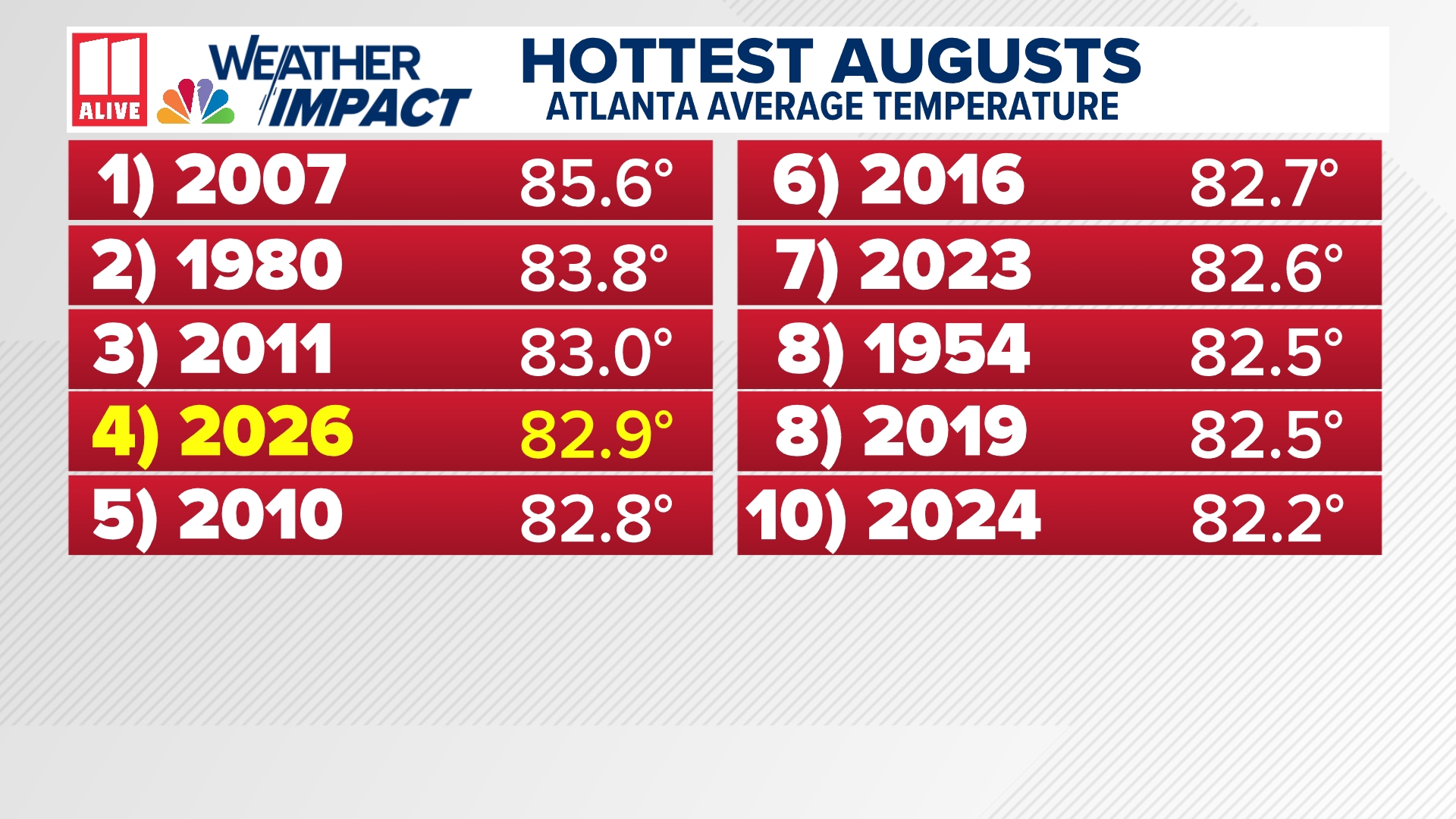
And the heat continued into August. Even late in the month, Atlanta was recording afternoons in the lower and middle 90s. On Aug. 25, for example, the temperature reached 94 degrees, six degrees above the normal high for that date.
The humidity also made many of those afternoons feel considerably hotter than the thermometer suggested.
So, was this Atlanta’s hottest summer?
No, and that’s what makes the national numbers interesting.
While the United States as a whole experienced a historically hot summer, Atlanta did not spend the entire season breaking temperature records.
There were plenty of hot days, muggy nights and stretches when the heat index climbed into the triple digits, but Atlanta also made it through the entire meteorological summer without officially reaching 100 degrees.
It’s a good reminder that a national climate statistic doesn’t necessarily describe what happened in every individual city.
And although meteorological fall began Sept. 1, Atlantans know the calendar doesn’t necessarily mean the heat is finished. September can still bring plenty of 90 degree afternoons before cooler fall air becomes a more regular visitor.