
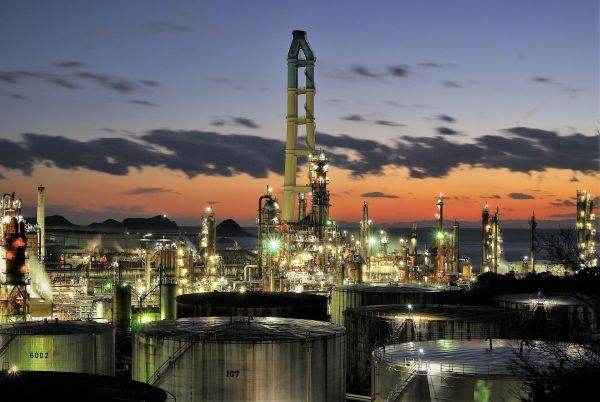
Oil futures fell yesterday on international markets as investors assessed the Democratic Party’s gains in the U.S. Congress during the midterm elections, as well as the implications for President Donald Trump’s future approach toward Iran. There is currently uncertainty regarding the path Washington might choose: the route of diplomacy or a return to military strikes, reports The Wall Street Journal.
According to Bloomberg, the price of West Texas Intermediate (WTI) crude for December 2026 delivery stood at $93.91 per barrel on the NYMEX yesterday at 8:40 a.m. local time-a 2.3% drop from Tuesday’s session-while Brent crude for January 2027 delivery reached $101.22 per barrel, also down by 2.3%.
• Gold and silver prices surge as the U.S. dollar declines
Precious metal prices rose sharply yesterday, driven by a weakening U.S. dollar and falling Treasury yields-developments that boosted commodity markets following significant gains by the Democrats in the U.S. midterm elections, according to the Anadolu Agency. The price of gold rose by more than 2% earlier in the day, once again surpassing the $4,000-per-ounce threshold.
Bloomberg data indicated that, on the Comex in New York, gold for December delivery reached $4,049.70 per ounce at 8:41 a.m. local time-up 2.8% from the previous day-while the spot price stood at $4,044.10 per ounce, an increase of 2.9%.
At the same time, the price of silver for December delivery reached $52.03 per ounce, up 4.6%.
Meanwhile, the U.S. Dollar Index fell below 101.5 points, hitting its lowest level in five weeks.
Markets have been weighing the prospect of the Democrats gaining control of both the House of Representatives and the Senate-a scenario that could lead to legislative gridlock, limiting President Donald Trump’s ability to advance his economic agenda and control federal spending.
A clean sweep for the Democrats could also pave the way for a stricter regulatory framework regarding artificial intelligence and more rigorous oversight of corporations, which might dampen the outlook for economic growth.
• Copper price recovers from losses
Copper recovered from earlier losses yesterday, remaining above the psychological threshold of $14,000 per tonne, reports mining.com.au.
At 07:00 GMT, the benchmark price for three-month delivery copper on the London Metal Exchange was down by only 0.16%, standing at $14,014 per tonne. Earlier, the price had fallen by as much as 1.53%, reaching its lowest level since August 3. The most actively traded copper contract on the Shanghai Futures Exchange saw a slight decline of 0.41%, settling at 107,670 yuan ($23,019 per tonne).
“The US election results have caused a volatile performance across financial markets, including for copper,” stated Ole Hansen, Head of Commodity Strategy at Saxo Bank.
Investors in the metals markets are closely monitoring the Democrats’ performance in the midterm elections, looking for signals regarding future regulation of artificial intelligence, US fiscal policy, and developments concerning Iran. Initially, copper faced downward pressure amid concerns that stricter regulatory oversight could slow investment in AI infrastructure-a key driver of projected future demand for the metal. Furthermore, investors are reassessing the outlook regarding the potential imposition of US tariffs on refined copper imports. The anticipation of such tariffs has, this year, contributed to the inflow of large volumes of copper into US warehouses, tightening supply in other regions and helping drive the metal’s price to a record high in September.
“The election result reduces the likelihood of tariffs being imposed on refined copper; this shift in expectations could have a greater impact on short-term prices than any potential change in the long-term demand outlook,” explained Hansen.
Among the metals traded on the LME, aluminum remained stable, zinc rose by 0.37%, lead fell by 0.13%, nickel climbed by 0.74%, and tin saw a slight increase of 0.08%.
In China, aluminum fell by 0.13%, zinc rose slightly by 0.04%, lead lost 0.72%, and nickel declined by 0.08%. Tin dropped by 1.6%, having previously reached its lowest level in seven months.