
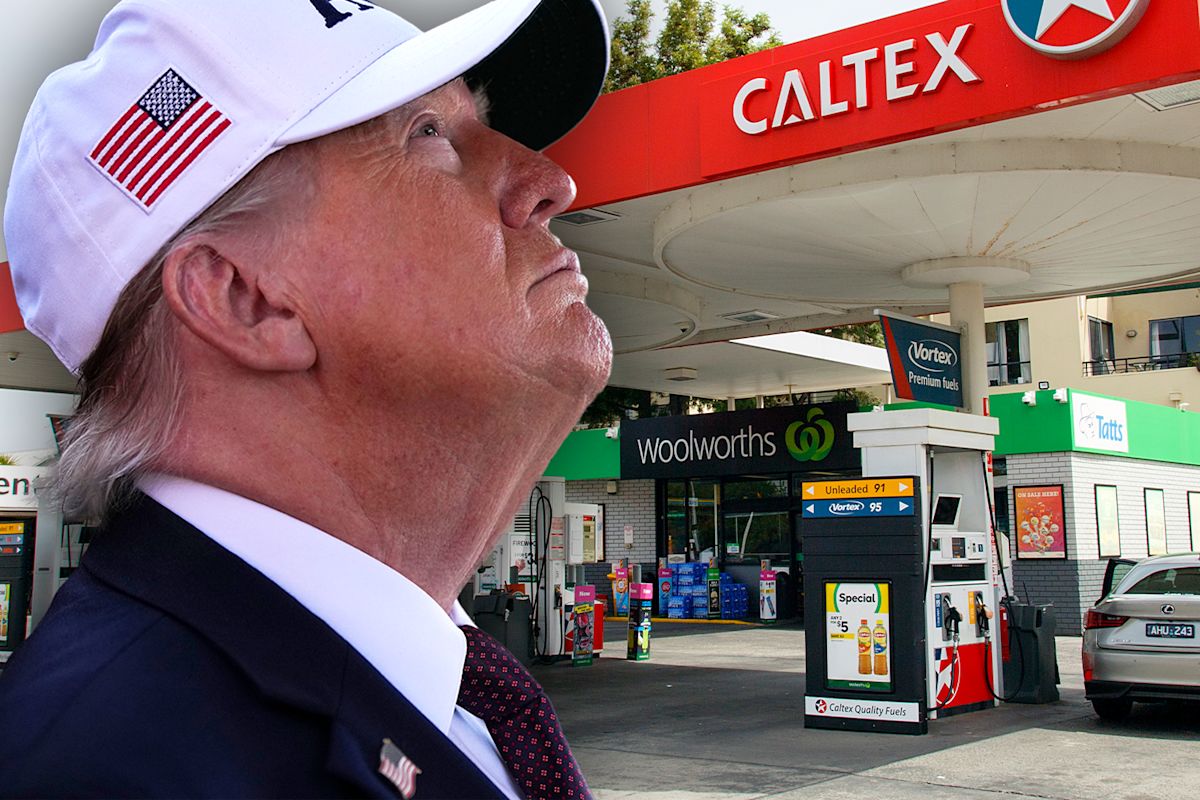
Australian drivers hoping for cheaper petrol could be waiting a while, despite a sharp drop in global oil prices overnight.
Oil prices dipped dramatically overnight following the stunning US midterm election results — in which Democrats took control of the Senate in an extraordinary MAGA wipeout — raising hopes that Australians could soon see some relief at the bowser.
Energy analyst Kevin Morrison with the Institute for Energy Economics and Financial Analysis warned that while wholesale oil prices have dropped, other costs involved in getting fuel to petrol stations remain high.
Meanwhile, Education Minister Jason Clare believes that there are some early signs of hope.
Do you have a petrol story? Contact newsroomau@yahoonews.com

Energy analyst Kevin Morrison with the Institute for Energy Economics and Financial Analysis. Source: ABC
Will fuel become cheaper now that oil prices have dropped?
Morrison explained that there are a whole range of factors contributing to the rising price of fuel, which has surged amid the conflict in the Middle East.
Speaking on ABC News Breakfasthe said cheaper crude oil — the type of oil used as a global benchmark for prices — won’t necessarily translate into immediate savings for motorists.
“While it is falling in one area, we will see high prices for some time,” he said.
“At the pump, there are more components, like refinery margins and also the actual costs of carrying the crude over the ocean.
“So, we have seen the shipping rates reach record highs recently, and also refiner margins. To give you an example, the refiner margin for diesel in Singapore is still around $165; that’s a $70 premium on the Brent Crude price we have seen fall overnight.”
Morrison said that Brent crude was trading at around $60 a barrel before the war began in February, compared with about $95 following the latest price drop.
Diesel prices in Australia have also risen dramatically, from around $1.80 a litre before the war to an average of $2.80 last week.
“We’ve already seen a dollar increase. So, it would still have to fall a fair way before we can go back to the prices we saw before this war started,” he said.
Morrison said that “we have no idea” what US President Donald Trump will do next in the Middle East, adding to the ongoing uncertainty.
“The Iran war is one of three conflicts that are affecting the flow of oil,” he said.
“We’ve also got the Houthis in Saudi Arabia, where they have damaged a lot of the Saudi oil infrastructure, particularly their pipeline, and we have the Ukraine and Russia conflict where Ukraine has managed to damage a lot of Russian refinery infrastructure.
“That’s where we see diesel prices high, because it knocked out a lot of Russia’s ability to export diesel, and they were the world’s second-biggest diesel exporter.
“There are a lot of moving parts, and we’ve only seen one part overnight: the US has overwhelmingly voted against the Iran war, and hopefully that may lead to some peaceful outcome.”

Australia’s Education Minister Jason Clare. Source: Getty
(Hilary Wardhaugh via Getty Images)Education minister ‘hopeful’ after ‘early good signs’
Education Minister Jason Clare acknowledged Aussies were battling hard with the rising living costs.
He said “hopefully” the price of fuel will “soon come down” and that the latest developments in the US would eventually ease pressure on households.
“People are doing it tough; you just have to go to the shops or the petrol station, and you can see the impact of inflation,” he told ABC News Breakfast.
Clare said fuel prices had risen 28 per cent over the past year, arguing that ending the conflict and reopening the Strait of Hormuz would be critical to bringing prices down.
“The sooner the war’s over, the better. The sooner the strait is open, the better,” he said.
“There are some early good signs. I think what everyone agrees on in the wrap-up of that election is that the cost of fuel was a big factor in those results.
“And here in Australia, we didn’t start the war, but we’re copping it.”
You can also follow us on Facebook, Instagram, TikTok, X and YouTube.