
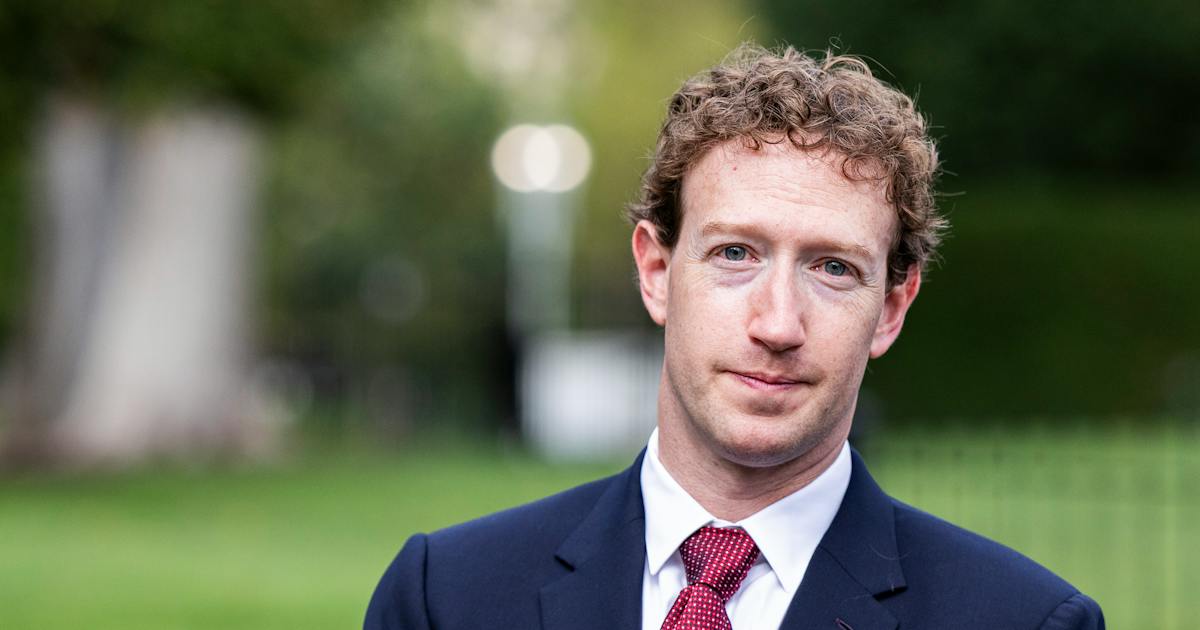
The stock that Meta gave Zuck didn’t increase the monetary value of his holdings. It wasn’t that kind of raise. It did, however, improve Zuck’s liquidity, freeing him to pay the California wealth tax without diminishing his control over Meta; under the agreement, Zuckerberg can immediately cash out 20 percent of the new shares. If Proposition 40 doesn’t pass, or if it gets thrown out in court, Zuckerberg can use that 20 percent to buy whatever he wants; the deal isn’t contingent on Proposition 40’s enactment. Either way, Zuckerberg will increase his disposable income. I call that a raise.
The stock grant solidifies Zuckerberg’s power over Meta. It doesn’t, strictly speaking, increase the dollar value of Zuckerberg’s shares, but when you’ve got $224 billion in the bank, the currency that really matters isn’t money so much as power. The craving, after accumulating great wealth, to accumulate power explains how America over the past half-century evolved into an oligarchy (see my piece “How the Billionaires Took Over,” June 2025). Zuckerberg isn’t, so far as I can tell, after political power so much as economic power, and this deal with Meta’s board grants him that. “It is an unprecedented move to protect a single person,” Andrew Behar, chief executive of the nonprofit shareholders’ rights group As You Sow emailed me, “especially one who just racked up a $25bn settlement with New Mexico, a $17bn settlement for a defective product, and with over 1,000 pending lawsuits that could easily be $100 million each.”
Here’s what Meta did to keep Zuckerberg in Palo Alto. It took its dual-class structure and turned it into a triple-class structure by creating, as a dividend, a Class C stock that has no voting rights at all. For every Class A or Class B share that Zuckerberg or any other Meta shareholder possesses, Meta awarded a Class C share. It’s an increase in stock shares but not an increase in their monetary value because creation of nonvoting Class C stock dilutes proportionally the value of existing Class A or Class B stock. The board used the Class C dividend, Matt Moscardi, co-founder of the shareholder research group Free Float, told me via email, “to use the market and minority shareholder capital to pay for Mark Zuckerberg’s millionaire tax.”