
Will Donald Trump strike Iran after the midterm elections? On election day he told the Financial Times the US is “locked and loaded if we need to go, but there may be no reason for it”. His self-imposed pause ended with the vote, the New York Times reported joint US and Israeli strike plans for the time after the midterms, and CNN reported that the Pentagon is weighing the GBU-43/B, the “mother of all bombs”. For traders, one finding matters first: in this war, gold has mostly fallen on the days oil jumped, so the reflex “war means gold goes up” has not held.
Trump, Iran and the markets: the key facts
- Status: no new offensive announced; the Wall Street Journal reported a US strike on Qeshm Island on the eve of the vote, described by officials as defensive.
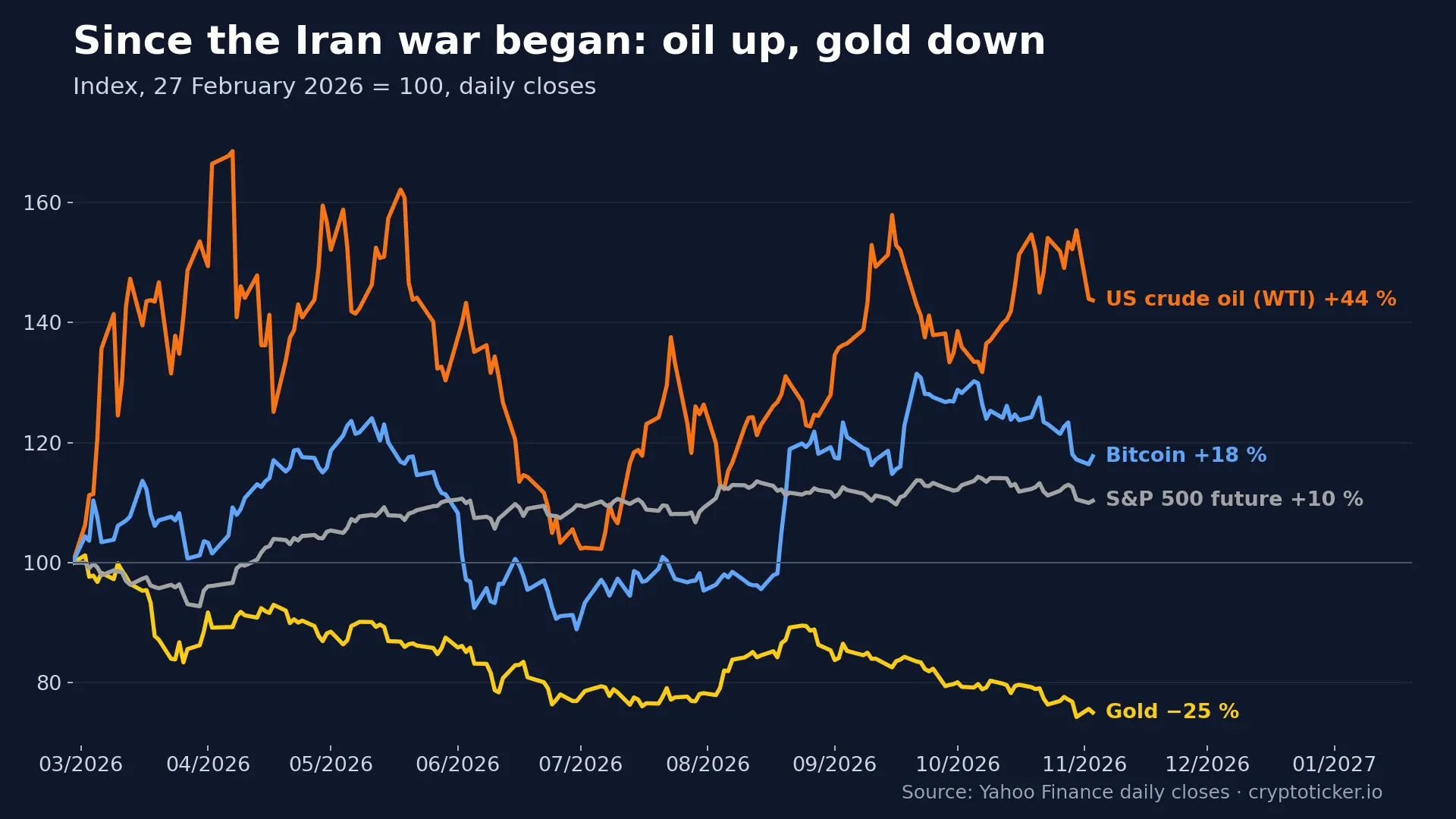
- Oil: Brent $104 and US crude $97 on 3 November, up 44 percent since 27 February.
- Gold: about $3,940, down 25 percent over the same period.
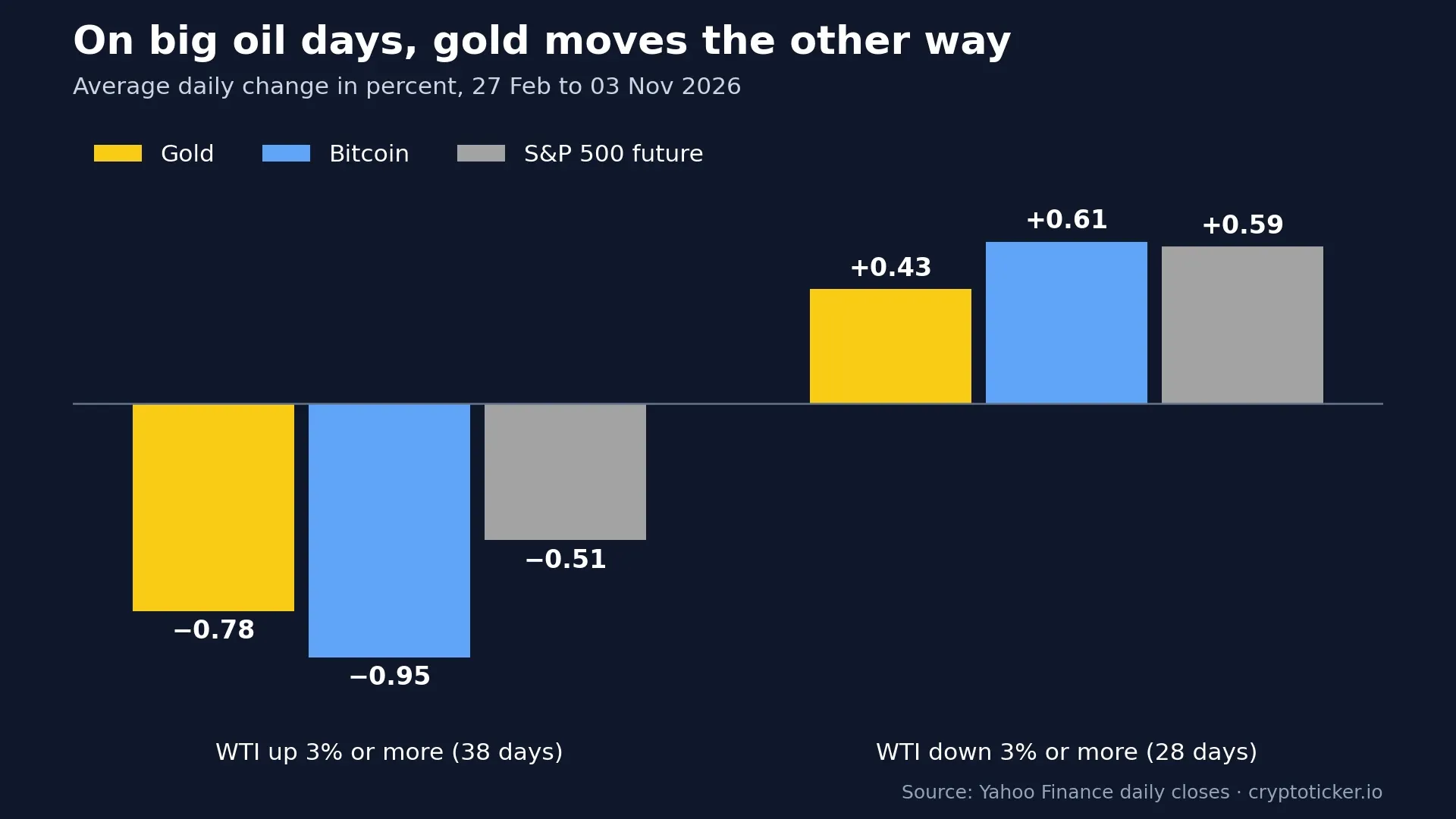
- Pattern: gold fell on 27 of the 38 days when US crude rose 3 percent or more.
- Voters: 63 percent in the preliminary NBC exit poll call the military action against Iran the wrong decision.
Will Trump attack Iran after the midterms? What is on record
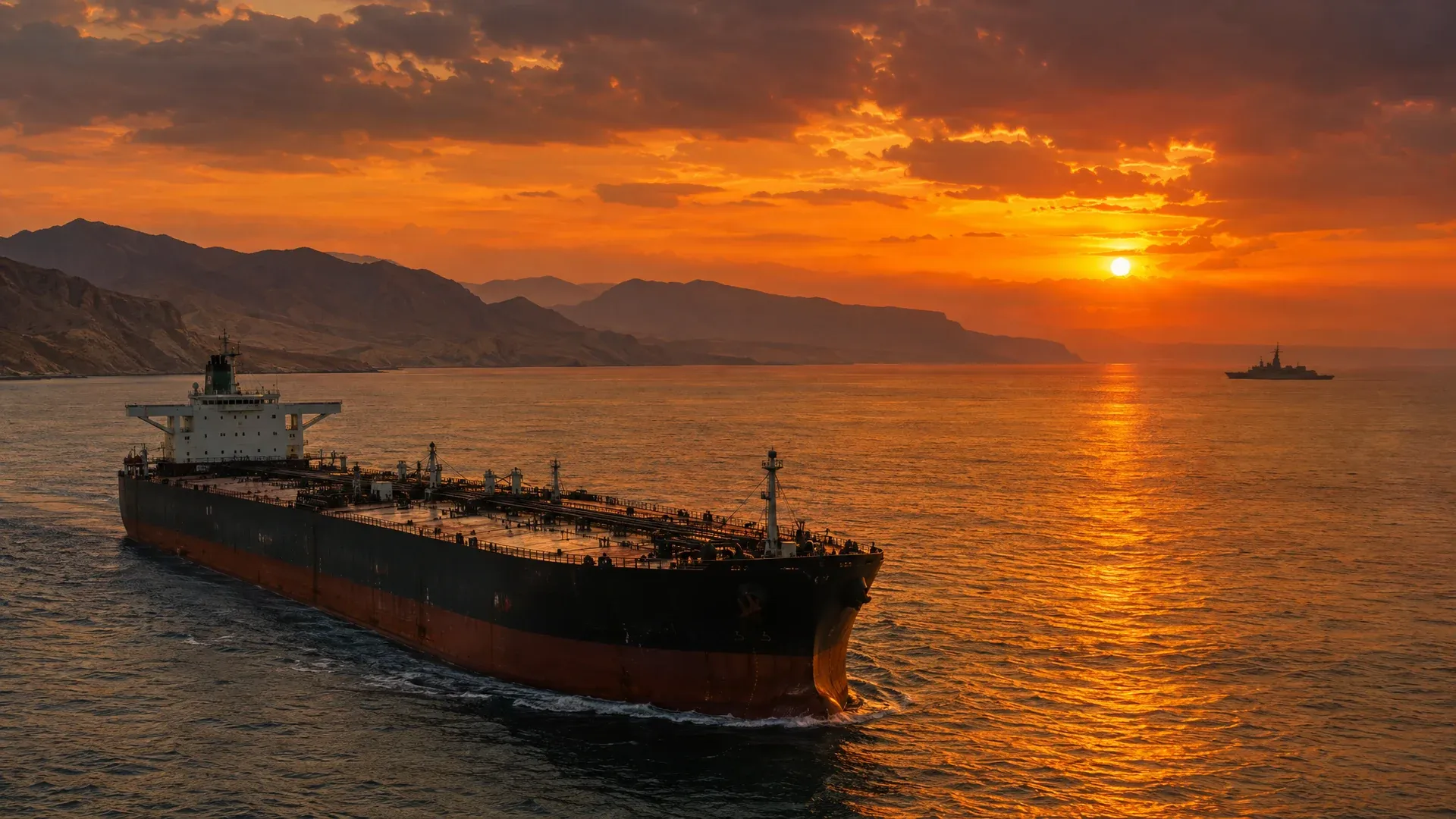
The conflict began at the end of February and has sharply reduced traffic through the Strait of Hormuz, which carried about a fifth of the world’s crude and gas before the war, CNBC reports. These are the documented steps of the past weeks:
- 13 July and 4 September: Trump tells a radio host the US will take out Pickaxe Mountain and later tells reporters it may be hit very soon (Reuters via The Star).
- 8 October: Trump says he will not order a resumption of strikes before the midterms (CNBC).
- 15 October: CNN, citing US officials, reports that the GBU-43/B is under consideration if strikes resume; CNBC could not independently confirm this.
- Late October: the New York Times reports joint US and Israeli strike plans for the time after the midterms; Axios reports the Pentagon told CENTCOM to finish preparations. These are plans, not orders (Al Jazeera).
- Shortly before the vote: in a Fox News interview, Trump says US forces “might have to go after” Pickaxe Mountain, calls that no big deal and says it could be done “in an hour” (Newsweek).
- 2 November: he raises doubts about resuming strikes and says a deal is possible (CNBC).
- 3 November: Trump tells the Financial Times: “We’re locked and loaded if we need to go, but there may be no reason for it” (Times of Israel, citing Reuters).
- 2 to 3 November: the Wall Street Journal reports a US strike on Qeshm Island; officials describe it as defensive, to stop attacks on shipping in the strait.
- Iran: Tehran says contacts to end the war continue; talks through Qatari mediators have not produced a breakthrough.
The result of the vote itself is in our midterm election results live tracker.
A strike to change the subject? What speaks for and against the theory
One theory is making the rounds: if Trump loses the midterms, a spectacular strike moves the debate away from the defeat. No report so far links a strike to the election result, so this stays a theory. The timing explains why it spreads: the pledge only ran until the vote, and the New York Times and Axios report plans for afterwards. The threats against Pickaxe Mountain go back to July, though, long before any result.
The evidence points the other way on the politics. In the preliminary NBC exit poll63 percent call the military action against Iran the wrong decision, only 4 percent name foreign policy as their top issue, and 39 percent name the economy. Gasoline cost $4.48 a gallon in September, 37 percent more than in October 2024, and $4.14 on election day, the highest Election Day price on record. A bigger war would first raise the price that hurts Republicans most. Our reading: a strike after the vote is a realistic scenario whoever wins. A strike because of a defeat is speculation.
What is the mother of all bombs (MOAB)?
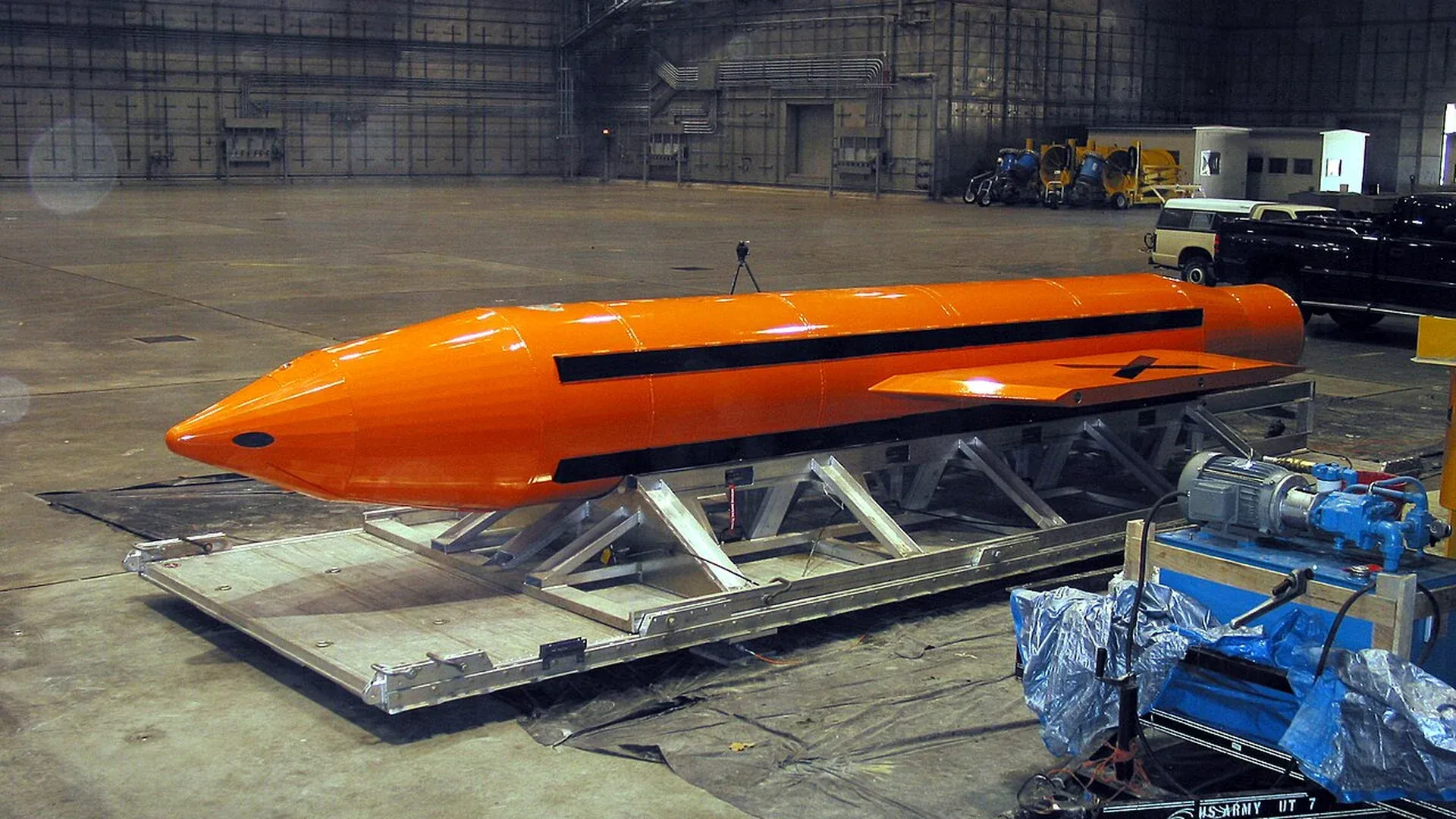
The GBU-43/B Massive Ordnance Air Blast weighs about 9.85 tonnes, carries 8.5 tonnes of explosive and reaches about 11 tonnes of TNT equivalent, according to Wikipedia’s technical summary. It is dropped from a C-130 transport aircraft and has been used in combat once, on 13 April 2017 against an Islamic State tunnel complex in Afghanistan.
Two details are often mixed up. The MOAB explodes above ground and is built for surface targets over a wide area, as CNBC also notes, so it is not the weapon for a site buried deep under a mountain like Pickaxe. For that, the US has the GBU-57 bunker buster, used in June 2025. And it is not the thermobaric bomb many people have in mind: that description belongs to the Russian FOAB, the so-called father of all bombs.
Oil price and gold price since the Iran war began
Since the last trading day before the war, oil has risen sharply and gold has fallen, while Bitcoin and US stocks have gained. The moves come from Yahoo Finance daily closes; the latest values are from 4 November, 01:00 CET.
| Market | 27 February | November 4, 01:00 CET | Change |
|---|---|---|---|
| Oil (WTI) | $67.02 | $96.64 | +44 % |
| Oil (Brent) | $72.48 | $104 | +44 % |
| Gold | $5,248 | $3,937 | −25 % |
| Bitcoin | $65,882 | $77,608 | +18 % |
| S&P 500 future | 6,889 | 7,606 | +10 % |
Why gold falls when the oil price jumps
We compared all 172 trading days since 27 February. On the 38 days when US crude rose 3 percent or more, gold lost 0.78 percent on average and fell on 27 of them. On the 28 days when crude fell 3 percent or more, gold gained 0.43 percent on average. Before the war, in the four months to February, the two moved slightly together; since then the correlation of their daily moves has turned negative, at minus 0.27.
Interest rates are the usual explanation. Expensive oil feeds inflation, inflation keeps rates high, and high rates and a strong dollar weigh on gold, which pays no interest. The first shock can still lift gold: on 6 March, crude jumped 12.2 percent and gold gained 1.6 percent. On 2 April, crude rose 11.4 percent and gold lost 2.8 percent. The wider picture is in our analysis Why is gold going down?
Three scenarios for oil, gold and Bitcoin after the midterms
These are not forecasts. The table shows how the markets behaved on comparable days since February, which is a pattern from one war and can break at any time.
| Scenario | Oil | Gold | Bitcoin and stocks |
|---|---|---|---|
| Escalation: large strike, Hormuz threatened | Up: crude gained up to 12 percent in a day | Often lower, a first shock can lift it | On average lower: Bitcoin −0.95 %, S&P future −0.51 % on big oil up days |
| Deal or ceasefire | Down: crude lost 16.4 percent on 8 April | On average higher | On average higher: Bitcoin +0.61 %, S&P future +0.59 % on big oil down days |
| Stalemate: threats and talks | High and jumpy | Follows rate expectations | Follow Wall Street and the US jobs report on 6 November |
How to trade oil and gold: brokers and crypto exchanges compared
Several of our partners now offer both markets next to crypto. They differ in product, hours and the countries they serve.
| Platform | Oil | Gold | Product | Hours |
|---|---|---|---|---|
| Bitget | Crude oil | Yes | USDT-margined perpetuals | 24/7 |
| XTB | Yes | Yes | CFDs on more than 30 commodities | Market hours |
| OKX Europe | WTI, Brent | Gold, silver | X-Perps, margin up to 10x | 24/7 |
| Coinbase | – | Gold, silver | Perpetuals up to 25x for eligible non-US users, check EU access first | 24/7 |
| Bitpanda | – | Gold, silver, platinum, palladium | Precious metals held in a vault, no leverage | In the app |
EU users: Bitget is not onboarding EU clients pending its MiCA application; use OKX Europe, Coinbase or Bitpanda. OKX runs its X-Perps in Europe under MiCA and MiFID II licences from Malta; they expire after five years and use a funding mechanism like perpetuals, Ledger Insights reports. Coinbase launched its gold and silver contracts on 6 May, and access depends on your country, according to Kitco; its EU offer from March covers crypto and equity index futures up to 10x, The Block reports. How perpetuals work is explained in our guide to crypto futuresand our comparison of crypto brokers shows the wider field.
XTB’s mandatory notice: CFDs are complex instruments and carry a high risk of losing money rapidly due to leverage. 78 percent of retail investor accounts lose money when trading CFDs with this provider.
Why a second account matters on nights like this
Verification takes time, so accounts are best opened before a market moves. Classic oil futures pause over the weekend, while 24/7 contracts keep quoting. A second platform also covers you if one has an outage: Binance suspended deposits and withdrawals after last week’s hack, as we covered in its reopening report. Compare regulated exchanges for the crypto side.
Risks of trading oil and gold with leverage
US crude moved 10 percent or more on six days since 27 February. At 10x leverage, a 10 percent move against you wipes out the margin, and prices can gap past a stop-loss when news breaks at night. In February, the European regulator ESMA said most perpetual futures are likely to count as CFDs. Only use money you can afford to lose. This article is not investment advice and makes no forecast about military decisions or prices.