

Harvard Step Test
The Harvard Staircase Test is used to measure the aerobic fitness of applicants and athletes, and is a predictive test for VO2max It is them. This test tests the cardiovascular system and shows the body’s general capacity to cope with a greater physical workload and the ability to recover from it. This test is simple and requires minimal equipment. Participants walk at a rate of 30 steps per minute for 5 minutes or until exhaustion. There are also other types of staged tests. We will examine them further.
Considering what we said in the introduction, nowadays it is unlikely that anyone will ask you to climb 5 floors of a building, but by using a 12-inch or 50-cm stair or floor, your physical fitness can be evaluated. Now it is enough to ask someone to measure the time for you and you focus on doing the movement so that you can finish the job.
Stair exams can be very challenging; If you have heart disease, if you suspect heart disease, or if you have major risk factors, talk to your doctor about a formal stress test instead of a stair test. And if you’re not physically ready or think the test is too hard for you, take a one-minute pre-test to see how you do.
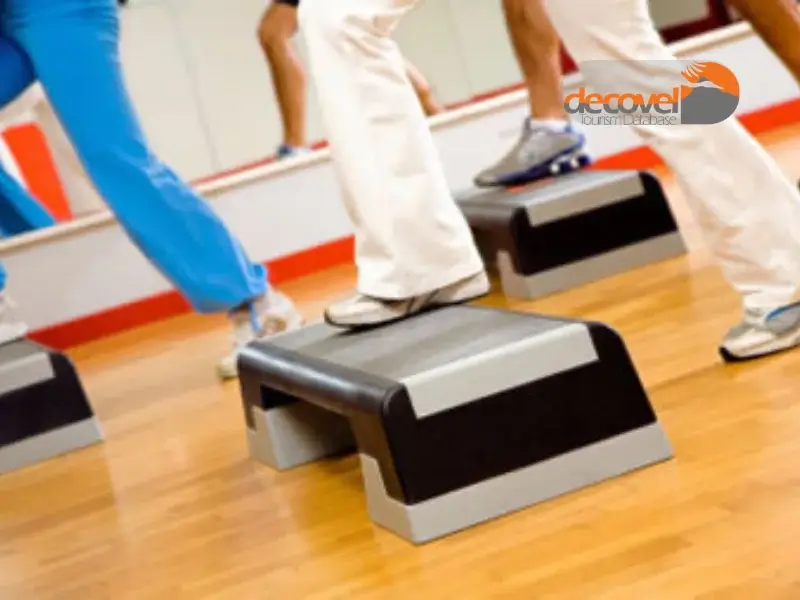
The target community of the Harvard Staircase Test
This test was originally developed for use by military personnel to test fitness, but was later used by civilians as well. Stage test can be done in children, teenagers, adults and athletes. In the following, we will examine the details of this test.
Equipment needed for the Harvard Step Test
Equipment needed: step or test platform (for men: 20 inches / 50.8 cm, for women: 16 inches / 40 cm), stopwatch, metronome or rhythm tape.
Preparation before the Harvard Step Test
- Explaining the test method from someone who knows the details and identifying the risks that this test can have.
- Record anthropometric data for further analysis if needed
- A person should rest or sit for 35 minutes
- Resting heart rate measurement
Harvard Staircase Test Protocol
The test participant goes up and down the stairs at a speed of 30 steps per minute (one second up, one second down) for 5 minutes or until fatigue. Fatigue means that the athlete cannot maintain the pace rate for 15 seconds in a row. After completing the test, the athlete is immediately seated and his total heart rate is counted 1 to 1.5 minutes after completion, 2 to 2.5 minutes after completion, and finally 3 to 3.5 minutes after completion. An athlete’s heartbeat can be counted by touching his wrist pulse.

Scoring the fitness index
Scoring: The athlete’s fitness index score is determined based on the following equations.
- Fitness index (short-term) = (100 x test duration in seconds) divided by (5.5 x total heart rate between 1 and 1.5 minutes after the test).
- Fitness index (long term) = (100 x test duration in seconds) divided by (2 x sum of heart beats in recovery periods).
For example, if the total time of the test is 300 seconds (if the test taker completed the entire 5 minutes) and their heart rate was 90 in the interval 1 to 1.5 minutes, 80 in the interval 2 to 2.5 minutes, and 70 in the interval 3 to 3.5 minutes, then the fitness index score is calculated as follows: (100 × 300) / (240 × 2) = 62.5.
|
rank
|
Physical fitness level
|
|
More than 96
|
wonderful
|
|
83 to 96
|
good
|
|
68 to 82
|
average
|
|
54 to 67
|
below average
|
|
Less than 54
|
weak
|
Modified versions of the Harvard Stair Test
The Harvard step test is one of the fitness assessment tools. Since the initial development of the Harvard Phased Test to evaluate soldiers in World War II, the basic technique of this test has been evaluated with various modifications and successfully applied in various settings. For example:
Modified Harvard Staged Test: A modified version of the original Harvard Staged Test, designed for ease of administration in all age groups. The height of the step/platform in the equipment was changed to 30 cm, and the rest of the protocol remained the same.
YMCA: developed age- and gender-specific standards for fitness assessment using the 1-minute heart rate recovery standard for the 30 cm (12 inch), 3 minute, 96 steps/minute format.

Modified Harvard Step Test to Assess Fitness in Cancer Survivors: In this version of the test, the step height is 23 cm (9 inches) and there are options to set your pace slower and/or stop the test before three minutes.
Tekamse Staged Test: It is a modified version of the Harvard Staged Test. The main differences from the original protocol include a lower step height (20 cm instead of 50 cm), a gentler stepping rate (24 steps per minute instead of 30 steps), and a shorter duration (3 minutes instead of 5 minutes). These changes make the test easier to perform and make it more suitable for epidemiological studies.
last word
Fitness assessment And the condition of the heart and blood vessels is very important in planning the training of athletes. Therefore, in addition to planning exercise, you should also regularly measure and evaluate. Along with the Cooper test and the rest of the methods, the Harvard step test is one of the methods of performing this evaluation. here to do It is Iran’s Adventure and Mountaineering Media and we were with you in this article titled Harvard Stair Test. Please do not deprive us of your comments.