
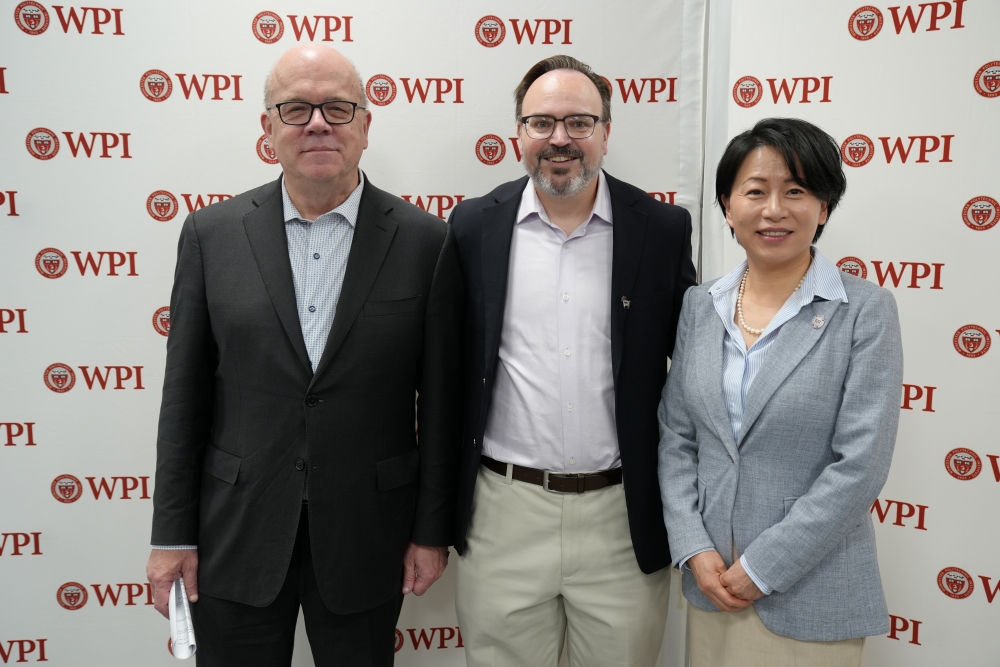
“Folks in Massachusetts and across the country deserve to know that their food and water is free from toxic PFAS chemicals,” said McGovern. “I’m proud that WPI is on the cutting edge of research to get these substances out of our soil for good. Because of the new funding we are announcing today, our commonwealth will remain at the forefront of the fight to get rid of forever chemicals once and for all. I’m grateful to President Wang, all the incredibly hard-working researchers at WPI, and Senators Warren and Markey for partnering to deliver this major new investment that will make a PFAS-free future one step closer to reality.”
“Massachusetts families shouldn’t have to wonder whether their water is clean and safe to drink,” said Warren. “I fought hard to secure funding for the cutting-edge research WPI is leading to clean up these chemicals and protect communities across the commonwealth.”
“As residents, businesses, and municipalities across Massachusetts continue to face the consequences of PFAS contamination, we are proud to partner with Worcester Polytechnic Institute to move forward essential research in the development of new technologies to remove these dangerous forever chemicals and protect our drinking water, farmlands, and environment,” said Markey. “Thanks to the hard work of the scholars at WPI, Massachusetts will be a leader in the next generation of PFAS remediation.”
Michael Timko, William B. Smith Professor of chemical engineering
The WPI-led project centers on a novel process known as Radical-Initiated Hydrothermal Liquefaction (RI-HTL). The technology uses heat, pressure, and nontoxic chemicals to destroy PFAS by breaking the strong carbon-fluorine bonds that make the compounds so persistent. Early laboratory testing has demonstrated that RI-HTL can destroy more than 99% of PFAS across multiple forms of contamination, including firefighting foams.
One of the greatest challenges in PFAS remediation is removing the chemicals from contaminated soil. WPI researchers will investigate the use of plants that naturally absorb PFAS as they grow. Once harvested, the contaminated biomass will be processed using RI-HTL, offering a promising new strategy for removing and permanently destroying PFAS from the environment.
Beyond environmental cleanup, the technology offers an additional sustainability benefit. The RI-HTL process converts contaminated biomass into bio-oil that can serve as a feedstock for sustainable aviation fuel and fuels for heavy-duty transportation, creating value from material that would otherwise be considered waste.